



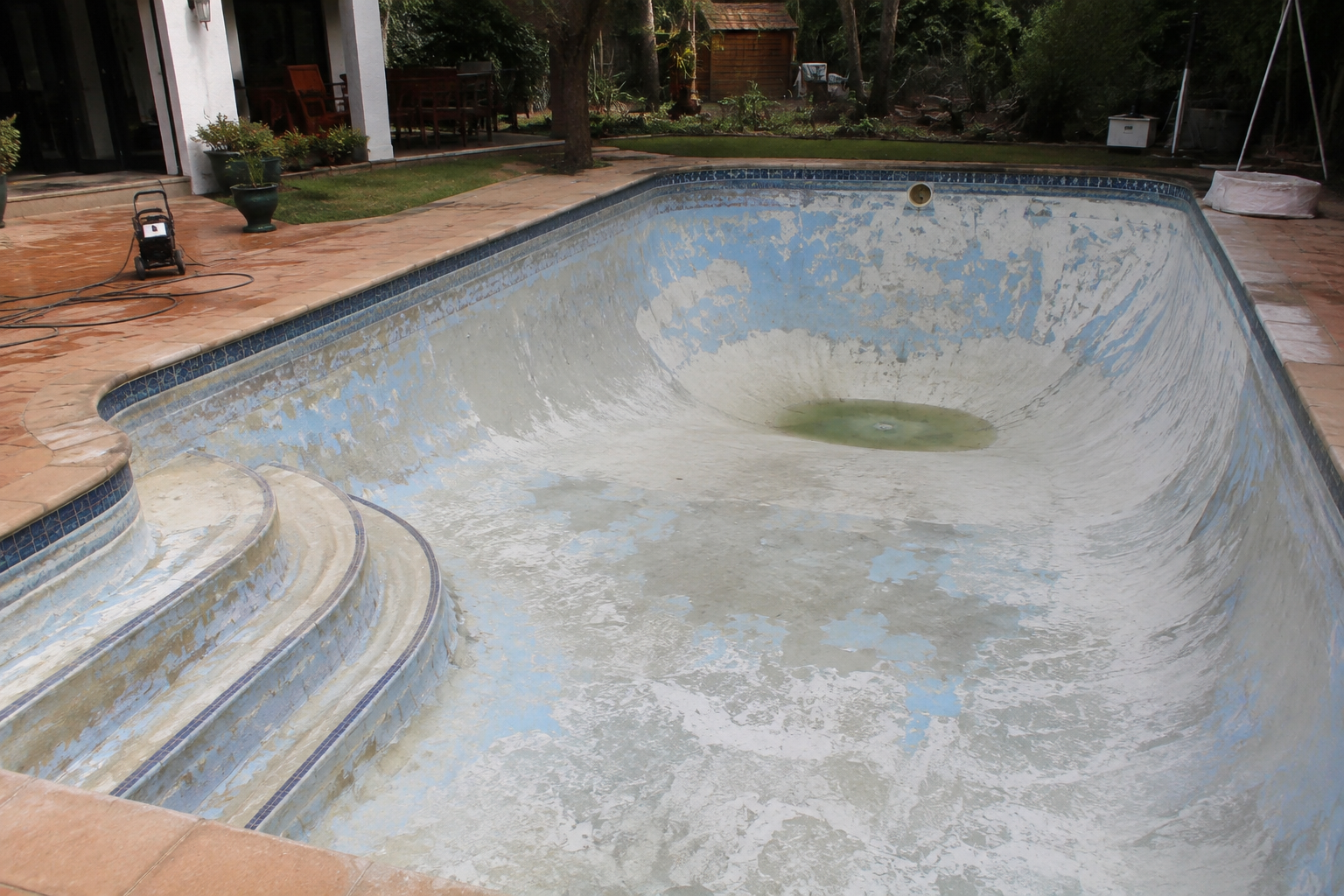
A swimming pool should be a place to relax, entertain friends, and enjoy Cape Town’s warm weather. However, years of exposure to sunlight, pool chemicals, changing temperatures, and everyday use gradually take their toll on the pool’s surface. What was once a smooth, glossy finish can become rough, faded, stained, or even begin to crack. When this happens, many homeowners assume the only option is to replace the entire pool, but that is often far from the truth.
Fibreglass pool relining is one of the most effective ways to restore an ageing swimming pool without the cost and disruption of a complete rebuild. It gives the pool a brand-new interior surface while strengthening its waterproof barrier, improving its appearance, and extending its lifespan for many years.
Whether you own an older fibreglass pool that has seen better days or you’re simply researching your options before damage becomes more serious, understanding what fibreglass relining involves will help you make an informed decision. In many cases, acting early can save thousands of rand in future repairs and keep your swimming pool looking its best for years to come.
Get a Free Fibreglass Pool Relining Quote
Speak to Absolute Pools today for expert advice, a professional pool assessment, and a no-obligation quote tailored to your swimming pool.
What Is Fibreglass Pool Relining?
Fibreglass pool relining is the process of restoring the interior surface of a swimming pool by installing a new fibreglass lining over the existing shell. Instead of demolishing the pool or replacing its structure, professionals repair damaged areas before applying fresh layers of fibreglass, resin, and a durable gel coat that creates a smooth, waterproof finish.
Many people think relining is simply another form of painting, but the two are completely different. Paint only changes the appearance of the pool for a relatively short period and offers very little structural protection. Fibreglass relining, on the other hand, renews the protective layer that keeps the pool watertight while significantly improving its durability.
The finished result is a swimming pool that not only looks newer but also performs like one. The surface becomes smooth again, colours appear richer, cleaning becomes easier, and the pool is better protected against everyday wear.
For many homeowners in Cape Town, fibreglass relining is the ideal balance between affordability and long-term value because it restores the existing pool rather than replacing it.
Why Do Fibreglass Pools Eventually Need Relining?
Even though fibreglass is known for being incredibly durable, no swimming pool lasts forever without maintenance. Every day, the pool is exposed to conditions that slowly wear away its protective surface. Sunlight gradually breaks down the gel coat, chemicals react with the finish over time, and tiny movements in the ground can place stress on the shell.
These changes happen so slowly that many homeowners do not notice them until the damage becomes obvious. A pool that looked perfectly normal a few years ago may suddenly appear dull, rough, or permanently stained despite regular cleaning.
Water chemistry also plays a significant role. When chlorine levels remain too high or the pH is consistently unbalanced, the protective coating can deteriorate faster than expected. This is one of the reasons professional pool maintenance is so important, even for pools that appear to be in excellent condition.
Age is another major factor. Like any building material, fibreglass eventually reaches a point where its original finish no longer provides the same level of protection it once did. Relining renews that protective barrier and allows the pool to continue performing as intended.
How Can You Tell If Your Pool Needs Fibreglass Relining?
Many swimming pools give subtle warning signs long before major problems develop. Unfortunately, these signs are often mistaken for normal ageing or cosmetic wear.
Some pool owners notice the surface becoming rough under their feet. Others find that stubborn stains keep returning no matter how often the pool is cleaned. In some cases, the colour becomes faded and chalky, making the pool look much older than it actually is.
More serious symptoms may include blistering beneath the surface, visible hairline cracks, exposed fibreglass fibres, or small leaks that cannot easily be explained. While these issues may initially seem minor, they often indicate that the protective gel coat has begun to fail.
Professional inspections are valuable because surface damage is not always as simple as it appears. What looks like a small cosmetic problem may actually be allowing moisture to penetrate deeper into the fibreglass layers. Addressing these issues early usually results in simpler and more affordable repairs.
Common Signs Your Pool May Need Relining
- Rough or abrasive pool surfaces
- Faded or discoloured gel coat
- Surface blistering
- Hairline cracks
- Exposed fibreglass fibres
- Persistent staining
- Areas that appear soft or weakened
- Water loss caused by damaged fibreglass
What Happens During the Fibreglass Relining Process?
Although every swimming pool is different, professional fibreglass relining follows a carefully planned process that ensures the new surface bonds correctly and lasts for many years.
The first step is draining the swimming pool completely so the entire shell can be inspected. This inspection allows technicians to identify structural cracks, delaminated fibreglass, blistering, loose sections, or any hidden damage that needs repairing before new materials are applied.
Once the inspection is complete, the existing surface is thoroughly prepared. This usually involves grinding and sanding away damaged gel coat and removing weak material. Proper preparation is one of the most important stages because the new fibreglass must bond securely to the original shell.
After preparation, damaged areas are rebuilt using high-quality fibreglass matting and specialised resins. Depending on the condition of the pool, several layers may be required to restore strength and stability.
When all repairs have cured correctly, a fresh gel coat is applied across the entire pool surface. This final coating creates the smooth, glossy finish that homeowners immediately notice once the project has been completed.
The pool is then left to cure before being refilled with water and balanced using the correct chemical levels.
Why Professional Installation Makes Such a Difference
Fibreglass relining is a specialised trade that relies heavily on experience, product knowledge, and proper preparation. While repair kits are widely available online, they rarely produce lasting results because they only address visible symptoms rather than the underlying cause of the problem.
For example, if moisture has already penetrated beneath the surface, simply covering the damaged area without removing compromised material may cause blistering or delamination to return within a relatively short period.
Professional installers understand how different resins behave during curing, how thick each fibreglass layer should be, and how environmental conditions such as humidity and temperature influence the finished product. These details may seem minor, but they have a significant impact on the longevity of the repair.
Choosing experienced pool repair specialists also means the entire shell is assessed rather than only repairing the obvious damage. This helps prevent hidden problems from developing into much larger repairs later.
Get a Free Fibreglass Pool Relining Quote
Speak to Absolute Pools today for expert advice, a professional pool assessment, and a no-obligation quote tailored to your swimming pool.
Fibreglass Relining or Pool Replacement?
One of the biggest questions homeowners ask is whether it is worth relining an existing pool or replacing it altogether.
In most situations, fibreglass relining is the more practical option because the existing pool structure remains intact. Rather than excavating the garden, removing the old shell, and installing a completely new pool, relining restores the existing structure at a significantly lower cost and with far less disruption.
Complete pool replacement generally becomes necessary only when there is severe structural failure that cannot be repaired safely. Fortunately, this is far less common than many people assume.
For pools that remain structurally sound, relining often provides an appearance that is remarkably similar to a newly installed swimming pool while avoiding the expense and inconvenience of starting from scratch.
What Influences the Cost of Fibreglass Pool Relining?
No two swimming pools are identical, which means there is no single price that applies to every relining project. The overall cost depends on several factors, beginning with the size and shape of the pool. Larger pools naturally require more materials and additional labour, while complex shapes with steps, benches, and curves often require more detailed workmanship.
The condition of the existing shell also plays an important role. A pool with only minor surface wear will generally require less preparation than one with extensive cracking, blistering, or water damage. Accessibility can also affect the project, particularly if equipment or materials are difficult to move onto the property.
The quality of the materials used should never be overlooked. Premium fibreglass systems and high-quality gel coats usually provide a longer-lasting finish, making them a worthwhile investment over the lifespan of the pool.
Because every project is unique, the most accurate way to determine pricing is through a professional inspection and quotation.
Looking After a Newly Relined Pool
A newly relined swimming pool can continue looking beautiful for many years with the right care. Good maintenance begins with balanced water chemistry, as incorrect pH or chlorine levels can shorten the lifespan of the protective gel coat.
Regular cleaning also plays an important role. Brushing the walls, removing leaves promptly, vacuuming the pool, and maintaining the filtration system all help preserve the smooth finish while reducing the build-up of algae and mineral deposits.
Professional servicing from time to time can also identify minor issues before they become significant repairs. Preventative maintenance is almost always more affordable than waiting until noticeable damage develops.
Tips for Extending the Life of Your Relined Pool
- Keep your pool water chemically balanced.
- Clean the pool regularly to prevent algae and staining.
- Repair minor damage before it worsens.
- Service your filtration equipment routinely.
- Arrange professional pool inspections when concerns arise.
- Avoid delaying repairs after noticing cracks or blistering.
Why Fibreglass Relining Is a Smart Long-Term Investment
Many homeowners initially view fibreglass relining as simply a cosmetic improvement, but it offers much more than a fresh appearance. A professionally relined pool restores waterproof protection, strengthens the existing shell, improves swimmer comfort, and often reduces ongoing maintenance because the smooth surface makes it harder for algae and dirt to cling to the pool walls.
It can also add value to a property. A neglected swimming pool often becomes an obvious concern for potential buyers, while a well-maintained, professionally restored pool creates a far better impression and demonstrates that the property has been cared for properly.
Most importantly, relining allows homeowners to continue enjoying their existing pool without the significant expense of complete replacement. When completed by experienced professionals using quality materials, it provides long-lasting performance that can be enjoyed for many years.
Conclusion
Fibreglass pool relining is one of the most effective ways to restore an ageing swimming pool while avoiding the cost and disruption of rebuilding it. By replacing the worn interior lining with new fibreglass and a durable gel coat, the pool regains its smooth finish, waterproof protection, and attractive appearance.
Recognising the early signs of surface deterioration and addressing them before they become major structural problems can save considerable time and money. Whether your pool has become rough, faded, stained, or has developed cracks, professional fibreglass relining offers a reliable solution that extends its lifespan and restores its beauty.
If you believe your swimming pool may be ready for relining, arranging a professional inspection is the best first step. An experienced pool repair specialist can assess the condition of the shell, recommend the most suitable solution, and help you enjoy a stronger, smoother, and longer-lasting swimming pool once again.
Get a Free Fibreglass Pool Relining Quote
Speak to Absolute Pools today for expert advice, a professional pool assessment, and a no-obligation quote tailored to your swimming pool.


Comments are closed