



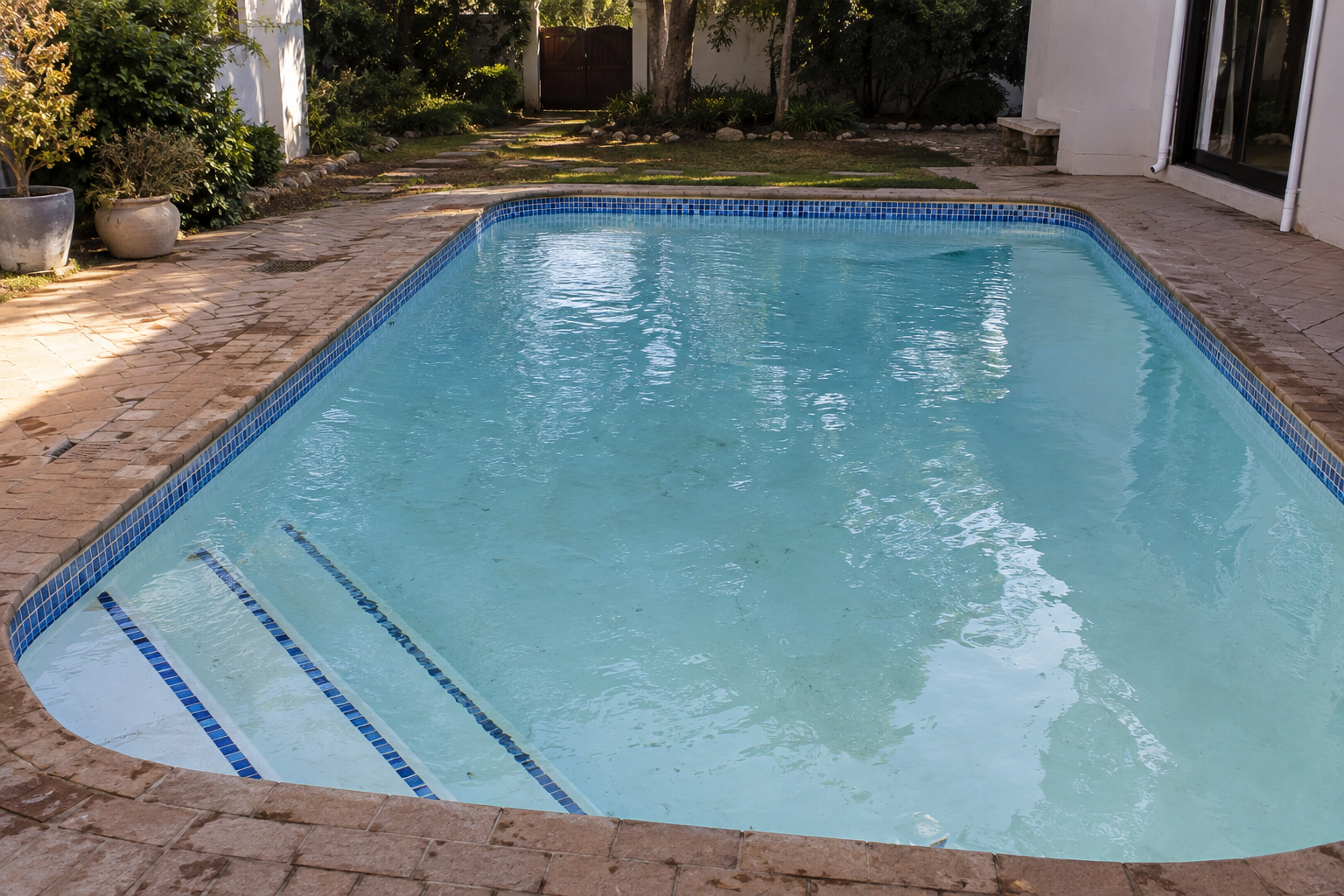
If you’re renovating an older swimming pool or building a new one, one of the biggest decisions you’ll make is choosing the right pool finish. It’s a choice that affects far more than just the appearance of your pool. The finish influences how long your pool lasts, how much maintenance it requires, how comfortable it feels underfoot, and even how much you’ll spend on repairs over the years.
For homeowners in Cape Town, the decision often comes down to two popular options: fibreglass lining and Marbelite. Both have been used successfully for many years, and both have their advantages. However, they perform very differently depending on the condition of your pool, your budget, your expectations, and even the local climate.
Many people assume there is a simple answer to which finish is “better”, but the reality is more nuanced. A finish that works perfectly for one homeowner may not be the ideal choice for another. Understanding the differences before investing can save you thousands of rand and help you enjoy your swimming pool for many years without unnecessary repairs or frustration.
In this guide, we’ll compare fibreglass lining and Marbelite in detail, looking at everything from installation and durability to maintenance, costs, lifespan, appearance, and long-term value. By the end, you’ll have a much clearer understanding of which option is best suited to your swimming pool and why many Cape Town homeowners choose one finish over the other.
Need Expert Advice Before Choosing a Pool Finish?
Contact Absolute Pools for a professional assessment and receive honest advice on the best finish for your swimming pool and budget.
Understanding the Difference Between Fibreglass Lining and Marbelite
Before comparing the two, it’s important to understand what each finish actually is. Many homeowners think fibreglass lining and Marbelite are simply different colours or textures, but they are completely different systems with different materials, installation methods, and long-term performance.
Marbelite has been used on concrete swimming pools for decades. It is a cement-based plaster containing crushed marble, cement, pigments, and specialised additives. Once applied to the concrete shell, it creates the familiar smooth white or coloured finish found in many traditional swimming pools.
Fibreglass lining, on the other hand, is made by applying layers of fibreglass matting and resin over the prepared pool surface before finishing everything with a durable gel coat. Rather than acting as decorative plaster, the fibreglass becomes a structural waterproof lining that strengthens the pool while creating an exceptionally smooth finish.
Although both achieve the same goal of providing a finished pool surface, they do so in completely different ways.
Why This Decision Matters More Than Most Homeowners Realise
Choosing a pool finish is not something you’ll want to repeat every few years. Unlike selecting paving or outdoor furniture, changing your pool finish involves draining the pool, preparing the surface, repairing existing damage, and completing a specialised installation process.
Making the wrong decision can result in higher maintenance costs, more frequent repairs, rough surfaces that become uncomfortable to swim in, or finishes that simply don’t perform well over time.
Cape Town presents its own unique challenges. Intense summer sunshine, changing temperatures, winter rainfall, coastal conditions in many suburbs, and varying water quality all place ongoing stress on swimming pool finishes. A finish that performs well elsewhere may not necessarily offer the same lifespan under local conditions.
This is why choosing the right finish should never be based solely on the initial installation price.
Fibreglass Lining
Fibreglass lining has become one of the most popular pool finishes for homeowners looking to restore or modernise an ageing swimming pool. It creates a tough, waterproof barrier over the existing pool shell, producing a smooth, non-porous surface that is comfortable underfoot and easy to maintain. Because algae and dirt find it more difficult to cling to the surface, many pool owners also find that cleaning becomes less demanding compared to more porous finishes.
Beyond its appearance, fibreglass lining is valued for its durability. When installed professionally, it strengthens the pool’s interior while protecting it from everyday wear caused by pool chemicals, sunlight, and regular use. It can also extend the lifespan of an older swimming pool, making it a practical alternative to more extensive structural renovations in many cases. The fibreglass pool relining process involves careful preparation and multiple installation stages, all of which contribute to the long-term performance of the finished surface.
What Is Marbelite?
Marbelite is one of South Africa’s most recognisable swimming pool finishes. For decades it has been the standard finish for concrete pools and remains a popular choice for both new builds and renovations.
Unlike fibreglass, Marbelite is essentially a specialised plaster. Once applied, it hardens into a durable cement-based surface that gives the pool its finished appearance.
Modern Marbelite is available in various colours and textures, allowing homeowners greater design flexibility than was available years ago. While traditional white remains common, many homeowners now choose blue, grey, or other shades to create different water colours and complement modern landscaping.
Although Marbelite produces an attractive finish, it remains porous by nature, meaning it behaves differently from fibreglass when exposed to algae, staining, and chemical fluctuations.
Installation: How the Two Systems Differ
The installation process is one of the biggest differences between fibreglass lining and Marbelite.
When installing Marbelite, the concrete shell is carefully prepared before the plaster mixture is applied evenly across the pool. Timing is extremely important because the material begins curing almost immediately. Once completed, the pool must be filled correctly to avoid uneven curing or visible staining.
Fibreglass lining follows a different approach. After preparing the surface and completing any structural repairs, technicians install layers of fibreglass matting saturated with resin. Once cured, a gel coat is applied to create the final finish.
Because fibreglass becomes bonded to the pool structure, it effectively forms an additional waterproof layer rather than simply acting as decorative plaster.
Both installation methods require skilled workmanship, but fibreglass installation generally involves more specialised materials and techniques.
Appearance: Which Finish Looks Better?
This is perhaps the most subjective comparison because appearance often comes down to personal preference.
Marbelite offers a timeless, traditional appearance that many homeowners associate with classic swimming pools. It creates a natural-looking finish that works beautifully with older homes and traditional garden designs.
Fibreglass delivers a more contemporary appearance. The gel coat provides a glossy finish that reflects sunlight beautifully and creates vibrant water colours. Many homeowners describe newly relined fibreglass pools as looking brighter and cleaner.
Neither finish is objectively more attractive. Instead, the decision depends on the style you’re trying to achieve.
Modern homes often pair exceptionally well with fibreglass, while heritage properties sometimes suit the softer appearance of Marbelite.
Which Surface Feels Better?
Comfort is something many homeowners overlook until after the renovation has been completed.
Fibreglass has one significant advantage here. Its smooth gel coat creates a surface that feels gentle beneath bare feet, making it especially popular for families with children who spend hours swimming during summer.
Marbelite can also feel smooth when newly installed, but as it ages, it often becomes rougher. Over time, slight erosion of the cement surface can expose the marble particles, creating a texture that some swimmers find abrasive.
For homeowners who enjoy spending long periods in the pool, this difference becomes increasingly noticeable.
Durability and Lifespan
Both finishes can last for many years when installed correctly, but they age differently.
Marbelite gradually wears away through exposure to pool chemicals, sunlight, and everyday use. Depending on maintenance and water chemistry, homeowners may eventually notice roughness, fading, staining, or small surface cracks developing.
Fibreglass tends to maintain its appearance for longer because the gel coat provides excellent protection against everyday wear. The waterproof lining also helps reduce moisture penetration that can contribute to deterioration beneath the surface.
Neither system lasts forever, but fibreglass generally requires fewer major interventions over its lifespan when maintained properly.
Which Finish Is Easier to Maintain?
Maintenance is often where fibreglass begins separating itself from Marbelite.
Because fibreglass has a non-porous surface, algae, dirt, and calcium deposits find it much harder to attach themselves to the pool walls. Cleaning becomes easier, brushing requires less effort, and many homeowners notice reduced chemical consumption over time.
Marbelite’s porous nature means microscopic openings can gradually harbour algae spores and mineral deposits. While regular maintenance easily manages this, neglected pools often require more intensive cleaning.
This doesn’t mean Marbelite is difficult to own. It simply demands greater consistency with water chemistry and routine cleaning.
Comparing Fibreglass and Marbelite at a Glance
| Feature | Fibreglass Lining | Marbelite |
|---|---|---|
| Surface | Smooth and non-porous | Cement-based and porous |
| Feel Underfoot | Very smooth | May become rough with age |
| Algae Resistance | Excellent | Good with proper maintenance |
| Cleaning | Easier | Requires more brushing |
| Waterproofing | Excellent | Relies on concrete shell |
| Appearance | Modern and glossy | Traditional and natural |
| Maintenance | Lower | Moderate |
| Renovation Choice | Excellent for ageing pools | Popular for concrete pools |
Which Option Costs More?
One of the first questions homeowners ask is, “Which finish is cheaper?”
The honest answer is that it depends on the condition of your pool.
A straightforward Marbelite installation may have a lower initial cost than fibreglass lining. However, initial cost only tells part of the story.
Long-term ownership should also be considered. If a finish requires more cleaning, more chemicals, earlier resurfacing, or additional repairs, those ongoing costs gradually narrow the price difference over time.
Fibreglass lining is often viewed as an investment because it combines restoration, waterproofing, and a new finish into a single solution.
Rather than focusing purely on today’s quotation, it’s worth considering what each finish is likely to cost over the next ten to fifteen years.
Unsure Which Finish Is Right for Your Pool?
Speak to Absolute Pools for a personalised recommendation based on your pool’s condition, your budget, and your long-term goals.
Which Finish Performs Better in Cape Town?
Cape Town’s climate creates conditions that pool finishes must withstand year after year. Long, hot summers expose pools to intense ultraviolet radiation, while winter rains and cooler temperatures introduce moisture and thermal changes that can gradually affect ageing surfaces. In coastal suburbs, salt in the air can also contribute to the wear experienced by outdoor structures over time.
These environmental factors make durability especially important. Fibreglass performs exceptionally well because its gel coat provides a strong barrier against moisture and UV exposure when properly maintained. The smooth, non-porous surface also makes it easier to keep clean during windy months when leaves, dust, and organic debris frequently end up in swimming pools.
Marbelite also performs well in Cape Town when installed professionally and maintained correctly. However, because it is a cement-based finish, it is generally more sensitive to inconsistent water chemistry. Allowing the pH or calcium balance to remain outside the recommended range for extended periods can shorten its lifespan and affect its appearance.
For homeowners who prefer a finish that requires less day-to-day attention, fibreglass often has the advantage.
Can Either Finish Be Repaired?
No swimming pool finish is completely immune to accidental damage or natural ageing, so repairability is another important consideration.
Minor fibreglass damage can usually be repaired by sanding the affected area, rebuilding the damaged section if necessary, and applying fresh gel coat. When completed by experienced professionals, these repairs often blend remarkably well with the surrounding finish.
Marbelite can also be repaired, but achieving a perfect colour match becomes increasingly difficult as the original surface ages. Newly repaired sections may appear lighter or darker until weathering gradually reduces the difference.
This doesn’t mean Marbelite repairs are poor, only that colour consistency can sometimes be more noticeable than with fibreglass.
Which Pool Finish Is Right for You?
There isn’t a universal answer because every swimming pool and every homeowner has different priorities.
If you’re renovating an older concrete pool and want a modern finish that is smooth, durable, and relatively easy to maintain, fibreglass lining is often an excellent investment. It is particularly attractive for homeowners planning to stay in their property for many years and who want lower ongoing maintenance.
If you prefer the classic appearance of traditional swimming pools, appreciate the natural texture of cement-based finishes, or are restoring a pool that has historically been finished with Marbelite, then Marbelite remains a proven and reliable choice.
The best decision ultimately depends on the existing condition of your pool, your renovation budget, how much maintenance you’re comfortable with, and the appearance you want to achieve.
Questions to Ask Before Choosing a Pool Finish
- Is your existing pool structurally sound?
- Are you looking for the lowest upfront cost or the best long-term value?
- How important is easy cleaning and algae resistance?
- Do you prefer a modern glossy finish or a traditional appearance?
- Are you planning to keep the property for many years?
Answering these questions honestly will often make the decision much clearer.
Conclusion
Fibreglass lining and Marbelite have both earned their place as trusted swimming pool finishes, but they offer different benefits. Marbelite continues to appeal to homeowners who appreciate a traditional look and have concrete pools that suit a cement-based finish. Fibreglass lining, on the other hand, has become increasingly popular because of its smooth surface, excellent durability, reduced maintenance requirements, and long-term value.
For many Cape Town homeowners, fibreglass lining proves to be the better long-term investment, particularly when renovating older pools. Its ability to strengthen the existing structure while providing a modern, waterproof finish makes it an attractive option for those looking to reduce maintenance without compromising on appearance.
The best choice, however, always depends on your individual pool and your goals. A professional assessment can identify the condition of your existing shell, highlight any hidden problems, and help determine which finish will provide the best results for years to come.
Let Absolute Pools Help You Choose the Right Finish
Whether you’re considering fibreglass lining or Marbelite, contact Absolute Pools today for expert advice, a professional pool assessment, and a no-obligation quotation tailored to your swimming pool.


Comments are closed