



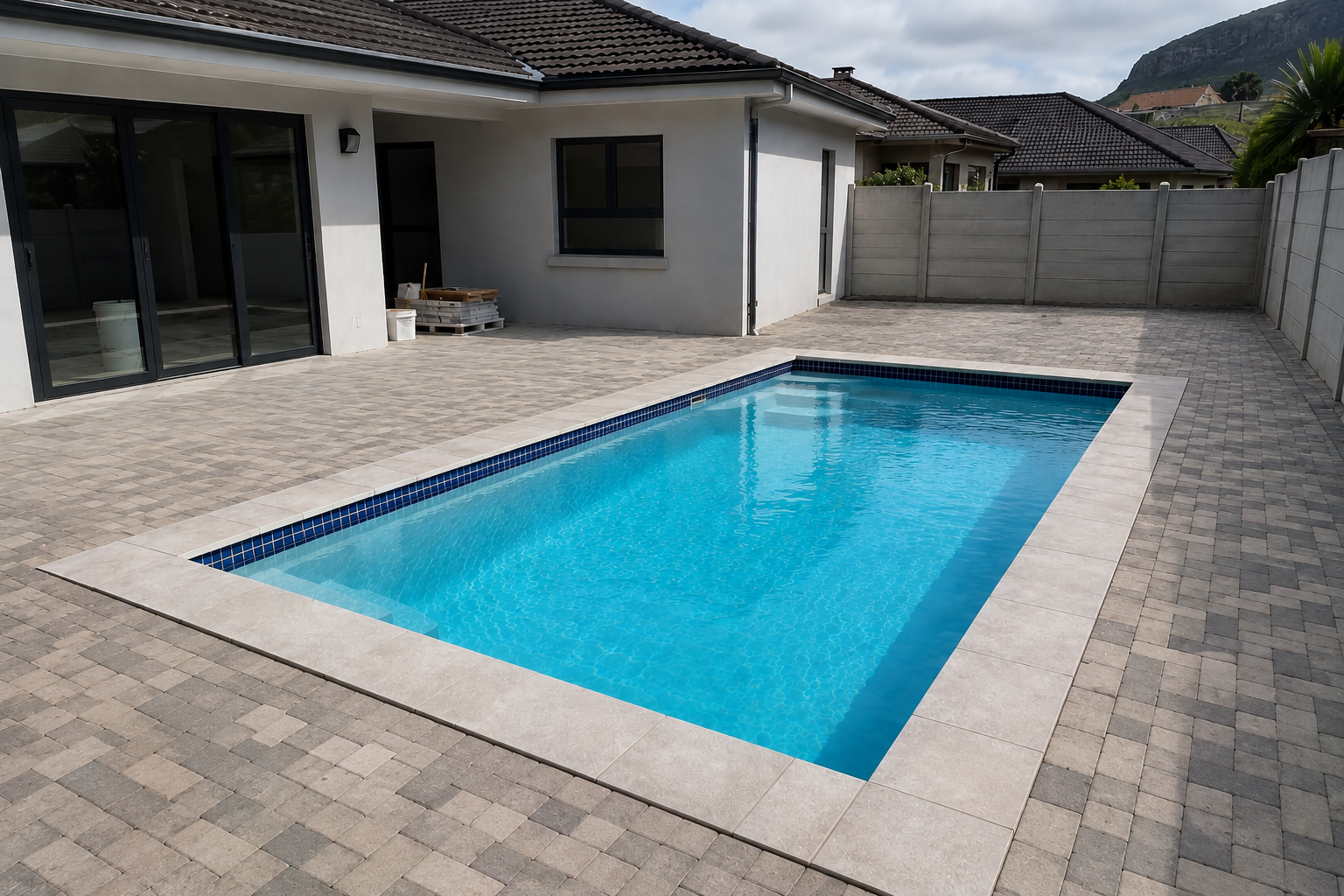
A new swimming pool changes more than just the look of a garden. It quickly becomes the centre of family gatherings, weekend braais, and those hot Cape Town afternoons when there’s no better place to cool off. For many homeowners, it’s something they’ve planned and saved for over a long period, so it’s only natural to want it looking just as beautiful years from now as it did on the day it was completed.
The truth is, a swimming pool doesn’t suddenly become difficult to maintain because it’s old. More often than not, the condition of a pool years down the line is determined by the habits that are formed from the very beginning. Pools that receive regular attention, balanced water chemistry and routine inspections generally remain easier and less expensive to maintain than those where small problems are allowed to build up over time.
That doesn’t mean you need to spend hours every week cleaning your pool or constantly adjusting chemicals. In fact, many experienced pool owners will tell you that consistency is far more important than effort. A few simple routines carried out regularly usually prevent the majority of the problems that lead to cloudy water, algae growth, damaged equipment or costly repairs.
Cape Town’s climate also plays a role in how a swimming pool should be cared for. During summer, high temperatures, increased evaporation and frequent swimming all place extra demands on the pool. Winter brings a different set of challenges, with rain, wind and falling leaves affecting both water quality and filtration. Understanding how these seasonal changes influence your pool will make maintaining it much less frustrating throughout the year.
Looking after a new swimming pool isn’t about chasing perfect water every single day. It’s about understanding how the pool works, recognising when something isn’t quite right and developing a maintenance routine that protects your investment for many years to come.
Start Your Pool Ownership Journey with Confidence
Every swimming pool has its own maintenance requirements. Complete the form below and let Absolute Pools provide expert advice to help you care for your new pool from day one.
The First Month Sets the Standard
One of the biggest misconceptions about a new swimming pool is that it can simply be left alone because everything is brand new. It’s an understandable assumption. The water is clear, the equipment is new, and the surface looks flawless. Surely nothing can go wrong so soon.
In reality, the first few weeks are when your pool begins settling into its long-term routine.
The filtration system starts operating every day, water chemistry begins changing as the pool is used, and environmental factors such as dust, sunlight and rainfall immediately start influencing the water. During this period, even small adjustments can have a significant impact on how easily the pool is maintained in the months ahead.
This is also the ideal time to become familiar with your equipment. Learn where the pump basket is located, understand how the filter operates and know where the valves are positioned. You don’t need to become a pool technician overnight, but having a basic understanding of how everything works will make routine maintenance far less intimidating.
More importantly, you’ll begin recognising what is normal for your pool. Once you know how the equipment normally sounds, how the water usually looks and how the circulation behaves, unusual changes become much easier to spot before they develop into expensive problems.
Good Water Chemistry Starts with Consistency
Ask almost any experienced pool professional what causes the majority of avoidable pool problems, and water chemistry will almost always be part of the conversation.
Many new owners believe that maintaining healthy pool water is about adding chlorine whenever the water starts looking dull. In reality, chlorine is only one part of a much bigger picture. Every chemical in your pool works together, and when one level falls outside the recommended range, it affects the performance of everything else.
This is why testing the water regularly is so important. It allows you to make small corrections before imbalances become large enough to affect the pool’s appearance, damage equipment or make the water uncomfortable for swimmers.
One of the easiest mistakes to make is overreacting. Cloudy water doesn’t always mean more chlorine is needed, just as crystal-clear water doesn’t necessarily mean the chemistry is perfect. The best results usually come from making small, measured adjustments rather than trying to solve every issue by adding large amounts of chemicals at once.
As you become more familiar with your pool, you’ll begin noticing how the water responds after heavy rain, periods of hot weather or busy weekends when the pool has been used more than usual. These observations are just as valuable as the results from a water test because they help you understand your pool’s normal behaviour.
Your Pump and Filter Do More Work Than You Realise
If someone asked what keeps a swimming pool clean, many people would immediately answer, “The chlorine.”
While chlorine certainly plays an important role, your pool’s circulation system is doing just as much work behind the scenes.
Every day, the pump draws water through the skimmer and main drain before passing it through the filtration system. Dirt, dust, insects and other debris are removed before the clean water is returned to the pool. This constant circulation prevents contaminants from building up and helps distribute chemicals evenly throughout the water.
When the pump or filter isn’t working efficiently, problems begin appearing surprisingly quickly. Water may become cloudy, chemicals become less effective and algae can start developing in areas where circulation is poor.
Fortunately, keeping the filtration system healthy doesn’t require specialist knowledge. Making sure the pump basket is emptied regularly, cleaning the filter according to the manufacturer’s recommendations and paying attention to any unusual noises or changes in performance will go a long way towards keeping everything running efficiently.
Many expensive pump failures don’t happen because the equipment was poor quality. They happen because small maintenance tasks were ignored until the system was forced to work much harder than it should have.
Cleaning Your Pool Is About More Than Appearance
A clean swimming pool is certainly more inviting, but regular cleaning isn’t only about appearance.
Leaves, grass, insects, pollen and dust constantly find their way into outdoor pools, particularly during windy days in Cape Town. Once this organic material enters the water, it begins breaking down. As it decomposes, it places extra demand on your sanitising chemicals and can eventually contribute to algae growth if it’s allowed to remain in the pool for too long.
Removing debris before it sinks to the bottom is one of the simplest ways to reduce unnecessary maintenance. Surface leaves are quick to skim away, while those left to settle on the floor often stain certain pool finishes if they’re left for extended periods.
Brushing the walls and steps should also become part of your routine, even if the pool looks perfectly clean. Brushing removes fine deposits that aren’t always visible and improves water circulation around the pool’s surfaces, making it more difficult for algae to establish itself.
Think of cleaning as preventative maintenance rather than simply housekeeping. The cleaner the pool remains, the easier every other aspect of pool care becomes.
Simple Habits That Protect Your Pool
- Test your water regularly instead of waiting for problems to appear.
- Remove leaves and debris before they begin breaking down in the water.
- Keep the pump and skimmer baskets free of blockages.
- Brush the pool walls and steps as part of your normal cleaning routine.
- Pay attention to changes in water level, water clarity and equipment performance.
Learn to Recognise the Early Warning Signs
Swimming pools are remarkably good at giving homeowners early warning when something isn’t quite right. The challenge is recognising those signs before they develop into larger and more expensive repairs.
Perhaps the water isn’t clearing as quickly as it normally does after cleaning. Maybe the pump has started making a slightly different sound, or you’ve noticed that the water level seems lower than usual every few days. Individually, these changes might not seem particularly important. Together, however, they often indicate that the pool needs attention.
One of the biggest mistakes new owners make is assuming that if the pool is still usable, the problem can wait. Unfortunately, that’s rarely the case. Small leaks become larger leaks, struggling pumps eventually fail, and water chemistry that remains unbalanced for long periods can begin affecting both the pool finish and the equipment.
The sooner small issues are identified, the easier and more affordable they usually are to resolve.
Every Season Brings Different Maintenance Challenges
One of the biggest surprises for new pool owners is discovering that a swimming pool doesn’t require exactly the same care throughout the year. The maintenance routine that works perfectly in January may need a few adjustments by the time winter arrives.
Cape Town’s climate is unique. Long, dry summers encourage frequent swimming, while strong south-easterly winds often carry dust, sand and leaves into the water. During these months, you’ll probably find yourself topping up the pool more often because of evaporation, cleaning out the skimmer basket more regularly and paying closer attention to chlorine levels.
Winter presents a different challenge altogether. Many homeowners assume that because nobody is swimming, the pool can simply be left until spring. Unfortunately, that’s one of the quickest ways to create unnecessary work later in the year.
Rainwater dilutes pool chemicals, wind carries organic debris into the water and colder temperatures can encourage neglect. Before long, what was once a healthy swimming pool requires hours of cleaning and chemical treatment before it can be used again.
Looking after your pool throughout winter doesn’t have to be time-consuming. A little attention every week is usually enough to keep it in good condition so that when summer returns, your pool is ready to enjoy instead of needing to be restored.
Don’t Be Too Quick to Add More Chemicals
When something doesn’t look quite right, it’s tempting to reach for the chemicals first.
Cloudy water? Add chlorine.
A little algae? Add more chlorine.
The water doesn’t sparkle? Add another product.
While pool chemicals are essential, adding them without understanding the underlying problem can sometimes create more issues than it solves.
For example, cloudy water isn’t always caused by a lack of chlorine. It could be the result of poor circulation, an overloaded filter, incorrect pH levels or even fine dust that hasn’t been filtered properly. Treating the symptom without identifying the cause often leads to unnecessary chemical use and ongoing frustration.
A better approach is to slow down, test the water properly and make small adjustments based on the results. Over time, you’ll become much more confident in understanding what your pool actually needs instead of guessing.
Watch Your Water Level
It’s completely normal for a swimming pool to lose some water, especially during Cape Town’s warmer months. Evaporation, splashing and backwashing the filter all contribute to gradual water loss, so topping up the pool every now and then isn’t unusual.
What isn’t normal is constantly reaching for the garden hose.
If you notice that the water level is dropping much faster than expected, it’s worth paying closer attention. A leak doesn’t always announce itself with obvious puddles or flooding. Sometimes the only sign is a pool that seems to need topping up more often than it should.
Making a habit of checking the water level every few days takes only a moment, but it can help identify a problem before it becomes costly. If you’re ever unsure whether you’re dealing with normal evaporation or something more serious, it’s always worth having the pool inspected.
Small Problems Rarely Stay Small
Swimming pools have a habit of rewarding homeowners who deal with issues early.
A tiny crack in a pipe, a worn O-ring or a filter that’s beginning to clog might not stop the pool from working today, but given enough time, each of these small issues can place extra strain on the entire system.
The same applies to surface damage. A small chip or minor crack may appear purely cosmetic, but if water begins working its way beneath the surface, repairs often become more involved than they would have been if addressed earlier.
This doesn’t mean you should worry every time you notice something unusual. It simply means that ignoring obvious warning signs usually ends up costing more than investigating them.
Think of your swimming pool the same way you would your car. Regular servicing and early repairs are almost always less expensive than waiting for a complete breakdown.
Create a Routine That Fits Your Lifestyle
One of the reasons some people find pool maintenance overwhelming is because they believe it has to be done all at once.
In reality, looking after a swimming pool is much easier when small tasks become part of your normal routine.
Perhaps you skim the surface while the children are getting ready for school, check the pump basket on a Saturday morning or test the water before the weekend. None of these tasks take very long on their own, but together they keep the pool healthy without maintenance ever feeling like a major chore.
The more familiar you become with your pool, the easier this routine becomes. You’ll know how long your filtration system normally runs, how quickly the water level changes after hot weather and how your pool responds after heavy rain. Those little observations are what make experienced pool owners seem to spot problems so quickly.
Not Sure If You're Looking After Your Pool Correctly?
Whether you have questions about water chemistry, filtration or routine maintenance, Absolute Pools is here to help. Complete the form below and our team will point you in the right direction.
When It’s Time to Call a Professional
Learning to care for your own swimming pool is rewarding, but there will always be situations where professional advice is the smarter option.
If the water remains cloudy despite balanced chemistry, algae keeps returning after treatment or the pool appears to be losing water faster than normal, it’s worth having the problem investigated rather than continuing to treat the symptoms.
The same applies to equipment. Pumps, filters and plumbing systems are designed to last for many years, but unusual noises, poor water circulation or recurring pressure issues often indicate that something needs attention.
Professional inspections aren’t only for major repairs. Sometimes they’re simply the quickest way to identify a small issue before it becomes a much larger one.
Enjoy Your Pool with Confidence
The goal of pool maintenance isn’t to create extra work. It’s to make sure your swimming pool is always ready when you want to use it.
When water chemistry is balanced, equipment is working efficiently and small issues are dealt with promptly, owning a swimming pool becomes surprisingly straightforward. Instead of spending weekends trying to recover green water or troubleshoot equipment problems, you can spend that time doing what the pool was built for in the first place.
A little consistency goes a long way, and the effort invested today will help keep your pool looking its best for many years to come.
Conclusion
A new swimming pool is an investment in your home, but it’s also an investment in the memories you’ll create with family and friends. Looking after it properly from the beginning is one of the best ways to protect that investment and ensure it continues to add value and enjoyment for years to come.
The good news is that effective pool care doesn’t require complicated routines or constant attention. By maintaining balanced water chemistry, keeping your filtration system in good condition, cleaning the pool regularly and responding to small problems before they grow, you’ll avoid many of the issues that lead to expensive repairs.
As you become more familiar with your pool, caring for it will feel less like a maintenance task and more like part of owning a home. With the right habits in place, you’ll spend far less time solving problems and far more time enjoying clear, inviting water throughout every season.
Looking for Advice That's Specific to Your Pool?
Every swimming pool has different maintenance needs. Complete the form below and let Absolute Pools help you keep your pool clean, healthy and performing at its best throughout the year.


Comments are closed