



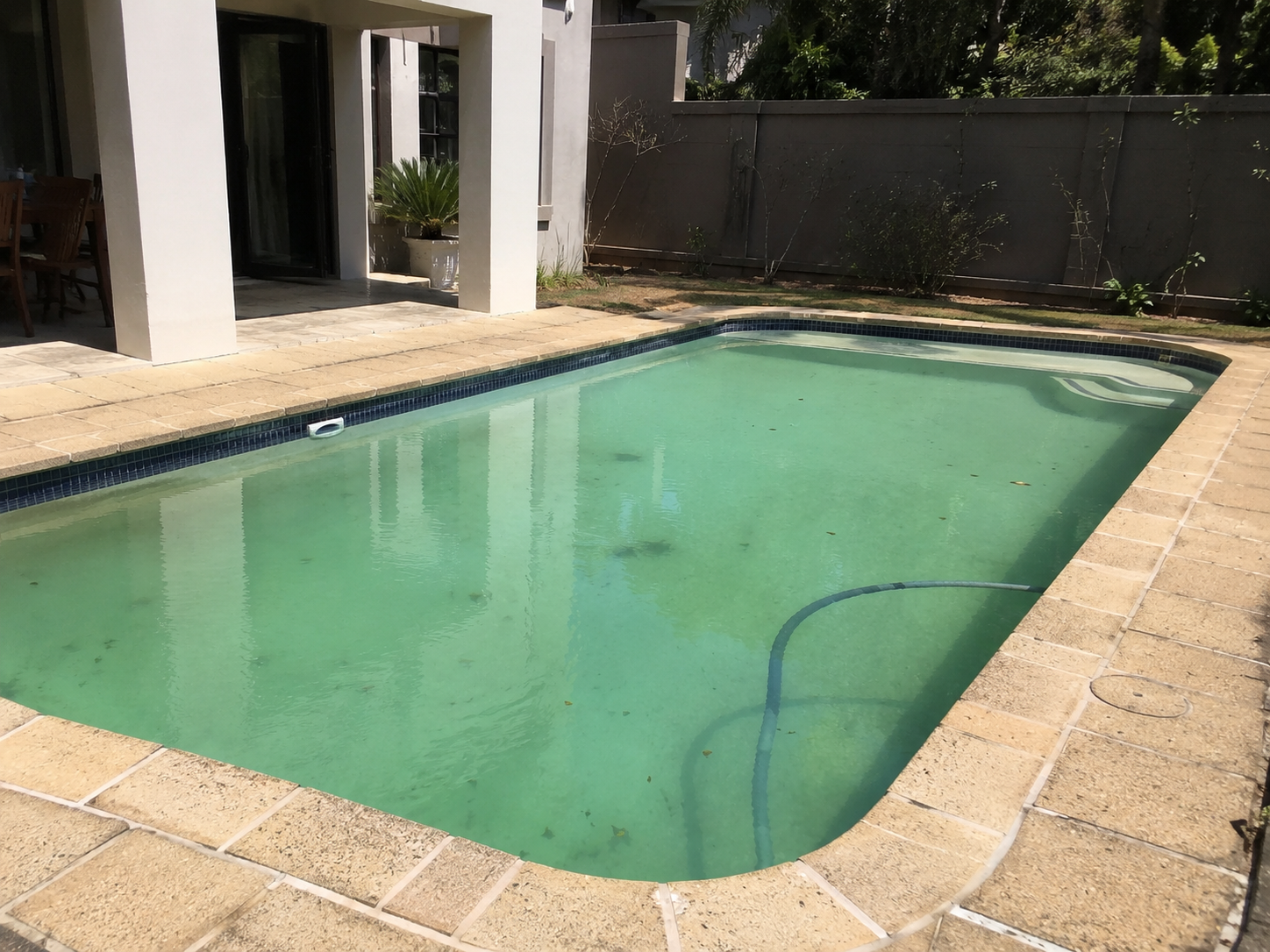
A swimming pool has a way of telling you when something isn’t right. Sometimes it’s obvious, like water that’s turned green after a few days of neglect. Other times it’s far more subtle. The water takes a little longer to clear after a windy day, the pump begins making a sound you’ve never noticed before, or a small crack appears that wasn’t there the previous summer. It’s easy to brush these things aside, especially when the pool is still usable, but they’re often the first signs that something needs attention.
Cape Town presents its own set of challenges. Summer brings intense sun, high temperatures and the famous south-easter that seems determined to fill every pool with leaves, dust and sand. Winter introduces heavy rain, fluctuating water chemistry and long periods where pools receive less attention than they should. Over time, these conditions affect every swimming pool, no matter how well it was built.
The good news is that most pool problems don’t appear overnight. They develop gradually, giving you plenty of opportunity to step in before a simple repair turns into a major renovation. Knowing what to look for is often the difference between solving a problem quickly and dealing with unnecessary expense later.
Below are five of the most common swimming pool problems seen across Cape Town and what you can do to keep them under control.
Not Sure What's Causing the Problem?
Describe what’s happening with your pool and let Absolute Pools help you find the right solution before the problem becomes more expensive to repair.
1. Green Pool Water and Algae Growth
Few things are more frustrating than pulling back the pool cover or looking out the kitchen window only to find that yesterday’s blue water has taken on a green tint.
Although it feels as though algae appears overnight, that’s rarely what actually happens. Algae spores are constantly present in the environment. They drift through the air, settle in the water and wait for the right conditions to multiply. Once chlorine levels begin dropping or water circulation becomes poor, those spores quickly take advantage.
Cape Town’s warm summers create almost perfect growing conditions. High temperatures, long hours of sunshine and increased pool use all place additional pressure on the water. Throw in a few windy days that fill the pool with leaves and organic debris, and algae suddenly has everything it needs.
One mistake people often make is assuming chlorine alone will solve the problem. In reality, green water is usually the result of several smaller issues happening at the same time. Poor circulation, blocked filters, incorrect pH levels and accumulated debris can all reduce the effectiveness of your sanitising chemicals.
The sooner algae is treated, the easier it is to remove. Waiting another week because “it isn’t that bad yet” usually means more chemicals, more cleaning and more frustration.
If the water repeatedly turns green despite regular treatment, it’s worth investigating the underlying cause rather than simply repeating the same chemical routine every few weeks.
Preventing Algae Before It Starts
Keeping algae under control is usually much easier than trying to remove it once it has taken hold.
Simple habits such as maintaining balanced water chemistry, brushing the pool walls, removing leaves before they sink and running the filtration system for the appropriate amount of time all reduce the chances of algae becoming established.
If your pool repeatedly develops algae despite following a good maintenance routine, there may be a circulation issue or equipment problem preventing the chemicals from reaching every part of the pool effectively.
2. Cracks in the Pool Surface
Not every crack means your swimming pool is about to fail.
That’s probably one of the biggest misconceptions surrounding pool damage.
Some cracks affect only the surface finish, while others indicate movement within the pool structure itself. Knowing the difference isn’t always possible without a professional assessment, but understanding the warning signs can help you decide when it’s time to investigate further.
Hairline cracks often begin so gradually that they’re only noticed months later. They may appear around steps, corners or older repaired sections of the pool. In some cases they’re purely cosmetic. In others they become pathways for water to reach areas it shouldn’t.
Water has an incredible ability to find even the smallest opening.
Once it begins moving beneath the pool surface, it can gradually weaken surrounding materials, contribute to larger areas of damage and make future repairs more complicated than they needed to be.
That’s why it’s generally a mistake to ignore cracks simply because the pool isn’t leaking visibly.
Even if the crack appears unchanged, monitoring it over time is worthwhile. Taking a photograph every few months provides an easy way to see whether it’s growing or remaining stable.
If multiple cracks begin appearing or existing ones become noticeably wider, a professional inspection should be arranged before carrying out cosmetic repairs.
Surface Crack or Structural Problem?
One of the first questions people ask is whether they can simply seal a visible crack themselves.
The answer depends entirely on what’s causing it.
If the crack exists only within an ageing surface finish, repairing or resurfacing the affected area may solve the problem.
If movement beneath the surface is responsible, sealing the crack without addressing the underlying cause is unlikely to provide a lasting solution.
This is why accurate diagnosis is often more important than the repair itself.
3. Cloudy Swimming Pool Water
Cloudy water has a habit of making people reach for the chemical cupboard immediately.
Sometimes that’s exactly what’s needed.
Quite often, though, the problem has very little to do with chlorine.
Think of cloudy water as a symptom rather than the problem itself.
Tiny suspended particles, poor filtration, unbalanced water chemistry, heavy rainfall, excessive swimmer load or even construction dust carried by the wind can all leave the water looking dull instead of crystal clear.
Cape Town’s dry summer winds regularly carry extremely fine dust that passes straight into swimming pools. Because these particles are so small, they don’t always settle on the floor where they can be vacuumed away. Instead, they remain suspended in the water until the filtration system gradually removes them.
This is why cloudy water shouldn’t automatically cause panic.
Start by asking a few simple questions.
Has the pool recently hosted a birthday party?
Did heavy rain fall during the past few days?
Has the filter been cleaned recently?
Has the pump been running for its normal schedule?
Answering those questions often provides the first clue towards solving the problem.
In many cases, a combination of proper filtration, balanced chemistry and a little patience is enough for the water to recover naturally.
If the cloudiness refuses to disappear after several days despite normal maintenance, the issue usually runs deeper than appearance alone.
4. Water Loss That Doesn’t Seem Normal
Every swimming pool loses water.
That’s perfectly normal.
Between evaporation, splashing and routine filter maintenance, a gradual drop in water level is simply part of owning a pool.
The challenge is recognising when water loss stops being normal.
Cape Town’s hot summers naturally increase evaporation, particularly when strong winds blow across the water surface. During these periods, topping up the pool occasionally isn’t unusual.
What deserves attention is a pool that seems to need topping up every few days regardless of the weather.
Often the first reaction is to blame the heat.
Then a few weeks pass.
The water keeps dropping.
Eventually the garden hose becomes part of the weekly routine.
That’s usually the point where a proper inspection becomes worthwhile.
Leaks aren’t always dramatic. They don’t necessarily produce obvious puddles or flooded gardens. Many remain hidden beneath paving, underground plumbing or behind pool walls, slowly wasting water while becoming more expensive to repair over time.
Sometimes the leak isn’t even in the pool shell itself. Worn seals, ageing pipework, faulty valves or damaged fittings can all allow water to escape gradually without immediately attracting attention.
One of the easiest ways to identify unusual water loss is simply becoming familiar with your pool. Once you know what a normal water level looks like throughout the week, unexpected changes become much easier to recognise.
5. Pump and Filter Problems
If the pool pump stopped working completely, the problem would be obvious.
What catches many people out is that equipment usually gives plenty of warning before it reaches that stage.
Perhaps the pump has become slightly noisier.
Maybe water isn’t returning through the jets with quite the same pressure.
The filter seems to need cleaning more often than usual.
None of these changes feel particularly urgent on their own, which is exactly why they’re often ignored.
The circulation system is the hardest-working part of any swimming pool. Every day it moves thousands of litres of water through the filtration system, keeping debris under control and distributing chemicals evenly throughout the pool.
When that circulation slows down, everything else begins suffering.
Water becomes harder to balance.
Cloudiness lasts longer.
Algae finds opportunities to develop.
Chemical consumption often increases.
Instead of treating the symptoms repeatedly, it’s worth asking whether the filtration system is still performing the way it should.
Sometimes the solution is as simple as cleaning a blocked basket or servicing a dirty filter.
Other times, worn equipment or ageing components need professional attention before they fail completely.
A well-maintained pump and filtration system doesn’t just keep the water cleaner. It makes every other aspect of pool maintenance easier.
Need Help Diagnosing Your Pool?
Some problems look obvious but have completely different causes. Complete the form below and let Absolute Pools identify the issue before unnecessary repairs or treatments cost you more.
Why Small Problems Become Expensive Repairs
Swimming pools are surprisingly forgiving.
A little dirt on the floor won’t damage anything overnight. A filter that’s slightly overdue for cleaning won’t immediately stop working, and a small crack doesn’t suddenly become a structural failure the following morning.
The problem is that swimming pools never stop reacting to their environment.
Water keeps moving. Chemicals continue interacting with the pool surface. Pumps keep working. The weather keeps changing. Every day that passes allows a small issue to develop a little further.
Think about a tiny plumbing leak hidden beneath the paving. During the first few weeks it may only waste a small amount of water. Months later, the same leak could be washing away supporting soil beneath the paving or forcing the pump to work harder because the water level constantly drops.
The same applies to algae. It almost always starts in one small area where circulation isn’t quite as good. Left alone, it spreads until what could have been solved in an afternoon becomes a much larger cleanup project.
This is why regular observation is one of the most valuable maintenance habits you can develop. You don’t need to inspect every tile with a magnifying glass. Simply noticing that something looks, sounds or feels different is often enough to prevent much bigger problems later.
Cape Town’s Climate Doesn’t Make Pool Care Easier
Owning a swimming pool in Cape Town has its advantages, but the climate can also be demanding.
The famous south-easter doesn’t only make afternoons windy. It carries fine dust, sand, pollen and leaves that eventually end up in the water. Even if your garden is spotless, the wind will often introduce debris from neighbouring properties.
Winter creates a completely different challenge.
Heavy rainfall dilutes pool chemicals and changes water balance much faster than many people expect. At the same time, swimming pools are used less frequently, making it easy to postpone routine maintenance because nobody plans on swimming for a while.
Then spring arrives.
The cover comes off.
Instead of sparkling blue water, the pool needs hours of work before anyone can enjoy it again.
Pools don’t stop needing attention just because the seasons change. The maintenance simply changes with them.
The Biggest Mistakes People Make
Pool problems aren’t always caused by age or bad luck. Quite often they’re the result of good intentions paired with the wrong approach.
Some of the most common mistakes include:
- Ignoring small problems because the pool still looks usable.
- Adding more chemicals before testing the water properly.
- Leaving leaves and debris in the pool for days.
- Waiting until the pump fails before having it serviced.
- Assuming every crack is purely cosmetic without having it assessed.
None of these mistakes seem particularly serious at the time. The trouble is that they usually lead to unnecessary repair costs that could have been avoided with earlier intervention.
Knowing When DIY Stops Being the Right Option
There’s nothing wrong with handling routine pool maintenance yourself.
Testing the water, removing debris, cleaning baskets and brushing the pool are all tasks that most pool owners can confidently manage.
The difficulty comes when maintenance turns into diagnosis.
Cloudy water, for example, might seem like a simple chemical issue, yet the real problem could be poor circulation caused by a failing pump. Repeated algae outbreaks might point towards hidden dead spots in the circulation system rather than poor water chemistry. A crack that appears harmless could be allowing water to reach areas beneath the pool surface where damage is slowly developing out of sight.
Trying to solve these problems through trial and error often becomes more expensive than identifying the real cause from the beginning.
Good maintenance is about knowing what you can confidently do yourself and recognising when professional advice will ultimately save both time and money.
Prevention Will Always Cost Less Than Restoration
One thing becomes obvious after looking at hundreds of swimming pools.
Pools that receive regular attention almost always age better than those that are only repaired once something goes wrong.
That’s because preventative maintenance slows the natural wear every swimming pool experiences.
Balanced water protects finishes.
Clean filters reduce strain on pumps.
Early leak detection prevents structural damage.
Routine inspections catch problems while they’re still small.
None of these tasks are particularly dramatic, yet together they often determine whether a pool still looks great after many years or requires significant renovation much sooner than expected.
Looking after a swimming pool isn’t about chasing perfection. It’s about staying ahead of problems before they begin affecting the rest of the system.
A Healthy Pool Is Usually a Predictable Pool
Experienced pool owners rarely panic when something changes because they already know what their pool normally does.
They know roughly how much water evaporates during a hot week.
They recognise the sound of the pump when it’s running properly.
They know how long the filter usually takes to clear cloudy water after heavy rain.
That familiarity is incredibly valuable.
Instead of reacting to every small change, they notice patterns. When something falls outside those normal patterns, it’s much easier to recognise that the pool needs attention.
Developing that understanding doesn’t happen overnight, but it grows naturally through regular observation and consistent maintenance.
Conclusion
Every swimming pool develops the occasional problem. That’s simply part of owning an outdoor feature that’s constantly exposed to changing weather, regular use and thousands of litres of moving water. What separates a minor inconvenience from an expensive repair is usually how quickly the problem is recognised and addressed.
Whether it’s green water, surface cracks, cloudy water, unexplained water loss or equipment that isn’t performing as it should, each issue begins with early warning signs. Paying attention to those signs and acting before they become more serious can save considerable time, money and frustration.
Just as importantly, remember that not every problem has the same solution. Two pools may show identical symptoms while the underlying causes are completely different. Taking the time to identify what’s really happening is often the most important step in the entire repair process.
With regular maintenance, prompt attention to unusual changes and professional advice when it’s needed, your swimming pool can continue providing years of enjoyment while avoiding many of the common problems that affect pools across Cape Town.
Not Every Pool Problem Needs a Major Repair
If something doesn’t seem quite right, let Absolute Pools assess the problem and recommend the most practical solution before it turns into a costly repair.


Comments are closed