

We provide specialized winterization services to safeguard your pool during the off-season, and when spring arrives, we handle the thorough opening process.
Recent Posts


Sign Up to get updates & news about us . Get Latest Deals from Walker's Inbox to our mail address.
Sign Up to get updates & news about us . Get Latest Deals from Walker's Inbox to our mail address.
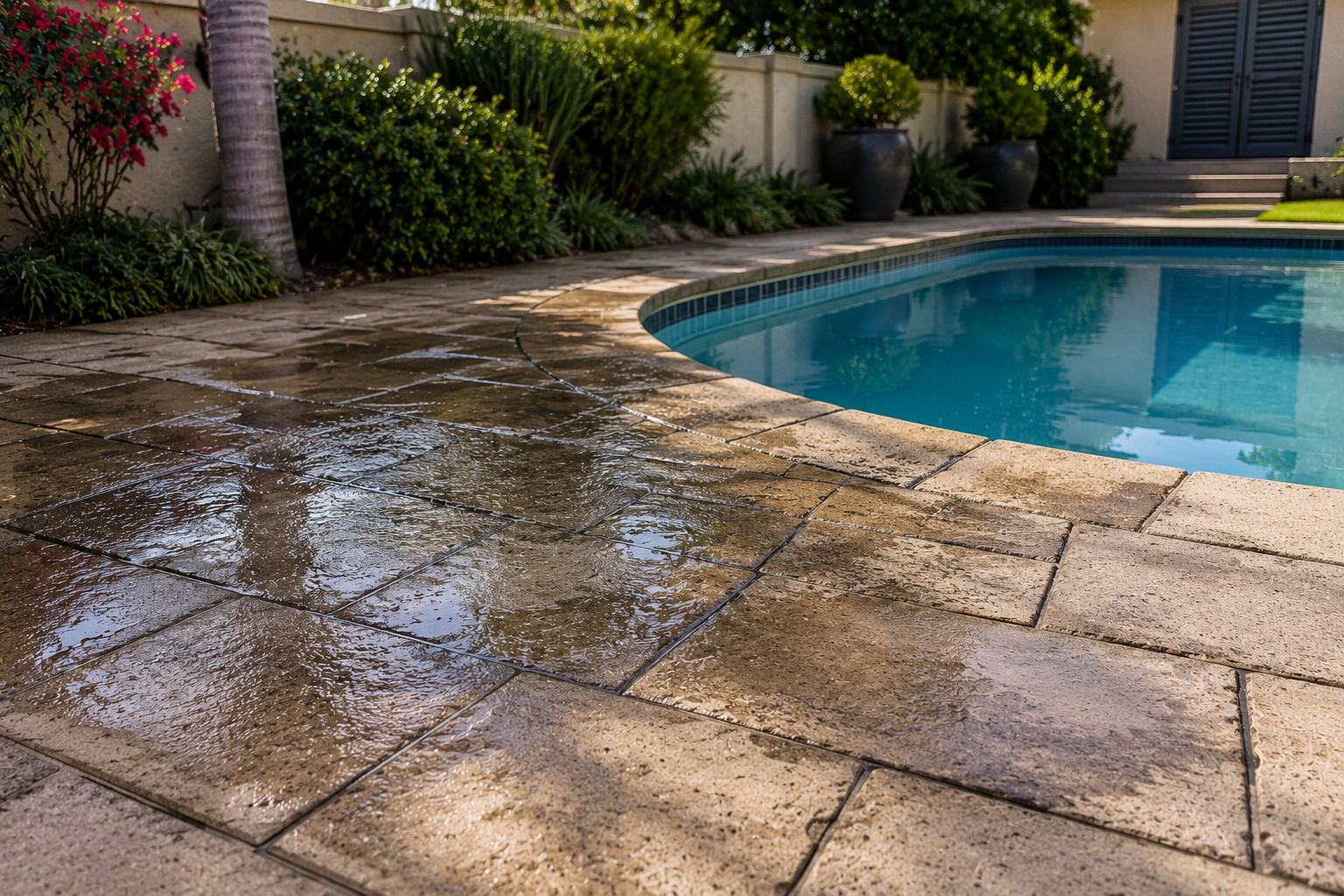
Wet paving around a swimming pool can indicate an underground pipe leak, damaged skimmer box, leaking fitting, faulty pool equipment or poor drainage. Absolute Pools investigates unexplained moisture and provides practical pool leak and paving repairs across Cape Town and surrounding areas.
Some water around a swimming pool is normal after swimming, cleaning, rain or backwashing. The paving should, however, begin drying once the source of the water stops.
Paving that remains wet during dry weather, repeatedly becomes damp in the same area or develops moisture whenever the pool pump runs may indicate a hidden pool leak.
Water can escape from underground plumbing, the skimmer box, return lines, suction pipes, pool fittings or equipment connections. It may travel beneath the paving before appearing at the surface, which means the visible wet patch is not always directly above the damaged component.
Cape Town’s varied soil conditions can also affect where leaking water becomes visible. Some properties have sandy, well-draining ground that absorbs water quickly, while others may develop obvious damp patches, sinking pavers or loose coping.
Wet paving is not always caused by the swimming pool. Irrigation pipes, garden taps, rainwater, overflowing gutters and poor drainage can produce similar symptoms.
Splashing around steps, shallow areas and pool entrances can also leave the surround temporarily wet. Water discharged during backwashing may collect near the equipment area if the waste pipe does not drain properly.
The paving should be investigated when the moisture appears without recent rain or swimming, returns whenever the pool pump operates, remains concentrated in one area or occurs together with a falling pool water level.
Fill the form below and our team will be in touch with you shortly.
Pool suction and return pipes are commonly installed beneath paving, concrete or garden areas.
A cracked pipe, failed joint or loose connection can release water directly into the ground beneath the pool surround. The water may rise through paving joints, create a damp patch nearby or disappear into the soil without becoming immediately visible.
Continual leakage can wash away bedding sand and weaken the support beneath the paving. This may cause individual pavers to sink, tilt, crack or sound hollow when walked on.
The skimmer box is a common source of wet paving because it is installed close to the pool edge and connects directly to underground suction plumbing.
Cracks in the skimmer body, failed seals, damaged pipe connections or movement between the skimmer and pool wall can allow water to escape beneath the paving.
The wet area may appear close to the skimmer, although underground water can travel before reaching the surface. Other signs may include a dropping water level, weak suction, air entering the pump or paving movement near the skimmer opening.
Return pipes carry filtered water from the pool equipment back to the swimming pool. These pipes operate under pressure while the pump is running.
A damaged return line may cause paving to become wet only during or shortly after the filtration cycle. The area may begin drying after the pump is switched off.
This pattern can suggest a pressure-side leak involving underground return plumbing, fittings, valves or connected equipment.
Suction pipes connect the skimmer, vacuum point or main drain to the pool pump.
A cracked suction pipe may draw air into the system while the pump operates and allow water to escape when the pump switches off. The leak can remain hidden beneath paving or soil.
Possible signs include wet paving, weak suction, air bubbles from the return jets, poor automatic pool cleaner movement or a pump that struggles to prime.
Return jets, vacuum points, pool lights and other fittings pass through the swimming pool wall.
Failed seals or movement around these fittings can allow water to escape behind the pool shell. The water may collect beneath the coping and surrounding paving before becoming visible.
A leaking fitting may also cause the pool water level to settle repeatedly near the height of the damaged component.
Pool pumps, filters, valves, chlorinators, heat pumps and connected pipework can leak while the circulation system is operating.
Water from the equipment area may run across the paving, soak into nearby ground or travel along pipes before becoming visible. Some equipment leaks stop as soon as the pump is switched off, making them difficult to identify when the system is not running.
Mineral deposits, water stains, damp concrete and wet pipe joints can indicate a long-standing equipment leak.
A damaged multiport valve may allow water to escape through the waste line while the pool is set to filter.
This can be difficult to notice when the waste pipe drains into a garden, stormwater outlet or another area away from the pool equipment.
Water flowing from the waste outlet during normal filtration may indicate a worn valve seal, damaged spider gasket or internal valve fault.
A swimming pool may overflow after heavy rain, excessive topping up or frequent use.
If the surrounding paving has poor falls or blocked drainage channels, water can remain trapped around the pool instead of draining away.
Drainage problems usually become more noticeable after rain, while a plumbing leak may continue during dry weather or follow the pool pump schedule.
A damaged irrigation pipe or sprinkler connection can produce wet paving close to the swimming pool.
The timing of the moisture may match the irrigation schedule rather than the pool filtration cycle. Both systems should be considered when the source is not immediately clear.
Fill the form below and our team will be in touch with you shortly.
Paving that becomes wet mainly while the pump operates may indicate a pressure-side pool leak.
Possible sources include underground return pipes, filter connections, chlorinator fittings, heating equipment, valves and plumbing after the pump.
When the system starts, pressure can force water through a damaged pipe or connection. Once the pump switches off, the leak may slow down or stop.
Monitoring the paving before, during and after the filtration cycle can provide an important clue about the affected section of the pool system.
Wet paving that continues developing while the circulation system is off may be connected to the skimmer box, suction plumbing, pool shell or a fitting below the waterline.
Water can continue escaping through gravity even without operating pressure.
The pool level may also drop overnight or settle close to the height of the leaking skimmer, light, vacuum point or return fitting.
Persistent moisture near the skimmer should be investigated carefully.
The skimmer body may be cracked, the connection behind it may be leaking or the seal between the skimmer opening and pool wall may have failed.
The surrounding paving may become loose, uneven or hollow if water has been escaping beneath it for an extended period.
Repair work may require a targeted section of paving to be lifted so the skimmer and connected plumbing can be reached.
Fill the form below and our team will be in touch with you shortly.
Moisture around the pool equipment area may come from the pump housing, pipe unions, filter tank, multiport valve, drain plugs, chlorinator or heat pump connections.
The equipment should be checked while the pool pump is running because some leaks are only visible under pressure.
Water can travel along pipes, equipment bases and paving joints, so the first damp area is not always the original leak point.
Persistent wet paving together with unexplained water loss strongly suggests that pool water may be escaping.
Mark the pool water level and monitor it under stable conditions. Avoid swimming, backwashing, topping up or allowing an automatic filler to replace the lost water during the test period.
A bucket test can also help compare the pool’s water loss with normal evaporation. If the pool level falls noticeably faster than the water inside the bucket, further leak investigation may be needed.
A pool can still be leaking even when the water level appears stable.
An automatic pool filler may be replacing the lost water continuously. Regular manual topping up can also hide the amount of water being lost.
The moisture may alternatively come from irrigation, rainwater, drainage or a smaller equipment leak that does not noticeably lower the pool level.
Monitoring water use, the automatic filler and the timing of the wetness can help narrow down the cause.
Fill the form below and our team will be in touch with you shortly.
Air bubbles returning through the pool jets may indicate that air is entering the suction side of the circulation system.
A leaking skimmer connection or underground suction pipe can draw air while the pump runs and release water when the pump switches off.
The pump may also lose prime, the basket may not remain full and the automatic pool cleaner may move poorly.
Wet paving near the skimmer or along the likely suction-line route makes this type of fault more likely.
Water escaping beneath pool paving can wash away bedding sand and weaken the supporting ground.
As support is lost, individual pavers may sink, tilt or move. Gaps can open between paving sections, and parts of the surround may feel unstable or sound hollow.
Simply lifting and levelling the paving will not solve the problem if the underground pool leak remains active.
The water source should be identified and repaired before the paving is reinstated.
Fill the form below and our team will be in touch with you shortly.
Pool coping forms the edge between the swimming pool shell and the surrounding paving.
Water escaping from a skimmer, fitting, underground pipe or cracked joint can weaken the bedding beneath the coping. Movement can then cause gaps, cracks or loose coping stones.
Damaged coping may allow additional water to enter the pool surround, worsening the paving and support problems.
The repair may need to address the leak, the coping and the affected paving together.
Mineral deposits can develop where leaking pool water repeatedly reaches the surface and evaporates.
White residue may appear around pipe joints, equipment connections, paving edges or coping. Green or brown staining may also develop depending on the pool chemistry and surrounding materials.
These deposits can help identify a long-standing leak even when the paving is dry at the time of inspection.
Cape Town’s winter rainfall can expose drainage problems around swimming pools.
Paving may remain wet because of blocked channels, poor slopes, saturated soil or water trapped beneath the surface. Rainwater problems usually affect broader sections of the pool surround and follow weather patterns.
A pool plumbing leak may remain concentrated in one area and continue after the rest of the property has dried.
Wet paving that returns during dry weather or follows the pool pump schedule should not be attributed to rain alone.
Fill the form below and our team will be in touch with you shortly.
Water near the pool equipment area after backwashing may be normal if the waste line discharges nearby.
The concern arises when the paving remains wet long after backwashing or becomes wet during normal filtration.
A leaking waste pipe, faulty multiport valve or unsuitable discharge route may need attention. Wastewater should be directed away from the pool surround and nearby structures.
Continual moisture can weaken the support beneath paving and coping.
This may lead to sinking pavers, cracked paving, loose coping and movement around the pool edge. Water may also affect nearby walls, garden areas or building foundations if the leak continues for a long period.
Early investigation can reduce the size of the affected area and the amount of paving that needs to be lifted and reinstated.
Paving should not be lifted randomly before the likely source has been narrowed down.
Underground water can travel away from the damaged pipe or fitting, meaning the visible wet patch may not sit directly above the leak.
The pool water level, pump schedule, skimmer, fittings, equipment and moisture pattern should be assessed first. Targeted pool leak detection can help identify the most likely repair area before access work begins.
Fill the form below and our team will be in touch with you shortly.
Absolute Pools begins by looking at where and when the paving becomes wet.
The pool water level, filtration schedule, skimmer box, fittings, equipment and visible plumbing are checked for signs of leakage. The paving may also be assessed for movement, hollow areas, cracks and repeated moisture patterns.
The circulation system can be observed while the pump is running and switched off to determine whether the moisture is connected to pressure-side or suction-side plumbing.
Where the source remains hidden, targeted pool leak detection can help narrow down underground pipework or pool fittings before paving is lifted.
The repair method depends on the confirmed source.
A targeted section of paving may be lifted to expose a damaged pipe, joint, skimmer connection or pool fitting. The faulty component is then repaired or replaced.
The plumbing should be tested before the paving is reinstated. This helps confirm that the leak has been resolved before access is closed.
Supporting soil or bedding sand may also need to be replaced where escaping water has caused erosion.
Once the pool leak or drainage problem has been resolved, loose or sunken paving can be reinstated.
The affected area may require new bedding material, levelling and replacement of cracked pavers. Pool coping may also need repair if it has shifted or become loose.
Reinstating the paving before repairing the source of the water can cause the same movement and damage to return.
Fill the form below and our team will be in touch with you shortly.
Absolute Pools investigates wet paving around swimming pools across Cape Town and surrounding areas, including the Northern Suburbs, Southern Suburbs, Atlantic Seaboard, Cape Town City Bowl, West Coast suburbs and Helderberg.
Service areas include Durbanville, Bellville, Brackenfell, Kraaifontein, Parow, Goodwood, Milnerton, Table View, Parklands, Blouberg, Century City, Pinelands, Rondebosch, Claremont, Newlands, Constantia, Tokai, Wynberg, Plumstead, Hout Bay, Sea Point, Green Point, Camps Bay, Somerset West, Strand, Gordon’s Bay, Stellenbosch, Paarl and surrounding areas.
Absolute Pools considers the pool plumbing, skimmer box, fittings, equipment, paving and drainage when investigating unexplained moisture.
We assist with pool leak detection, underground pipe repairs, skimmer box repairs, equipment repairs, coping repairs and pool paving repairs.
Our focus is on locating the water source before repairing and reinstating the affected pool surround.
Wet paving that keeps returning may indicate a hidden pool leak, damaged plumbing or drainage problem.
Contact Absolute Pools for pool leak detection, underground pipe repairs and pool paving repairs across Cape Town and surrounding areas.
Fill the form below and our team will be in touch with you shortly.
WhatsApp us