

We provide specialized winterization services to safeguard your pool during the off-season, and when spring arrives, we handle the thorough opening process.
Recent Posts


Sign Up to get updates & news about us . Get Latest Deals from Walker's Inbox to our mail address.
Sign Up to get updates & news about us . Get Latest Deals from Walker's Inbox to our mail address.
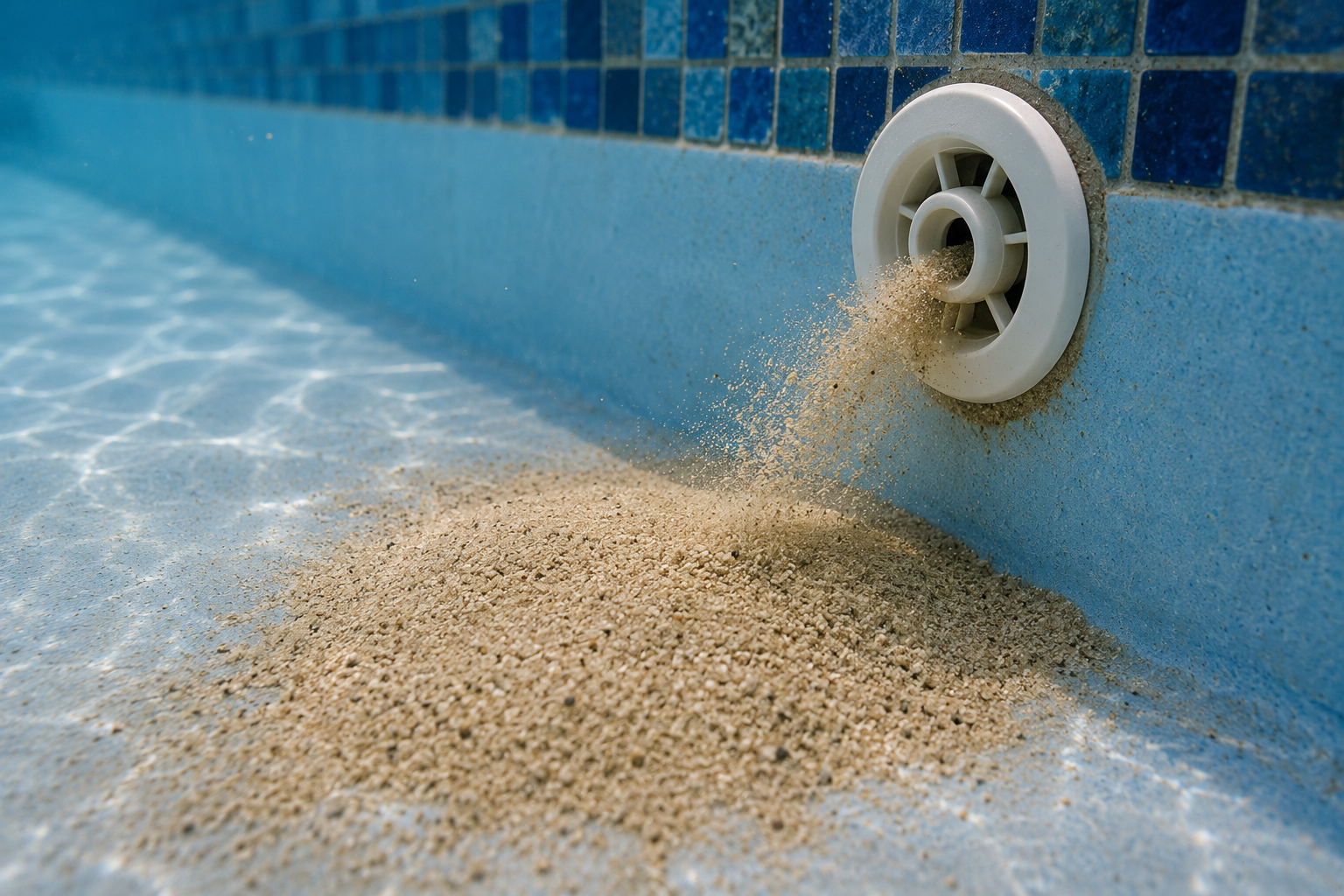
Sand collecting beneath the return jets or spreading across the pool floor usually indicates a problem inside the sand filter. Absolute Pools diagnoses and repairs pool filter faults across Cape Town and surrounding areas.
A sand filter should trap dirt as pool water passes through the filter medium. Once filtered, the water should return to the swimming pool without carrying filter sand with it.
When sand appears beneath the return jets, an internal filter component may be cracked, incorrectly fitted or damaged. The most common causes are broken laterals, a cracked standpipe, unsuitable filter sand, excessive sand inside the tank or a fault that developed during a recent sand change.
Sand can also enter the pool from surrounding paving, garden beds or wind. Identifying whether the material is genuinely coming through the return system is therefore an important first step.
Filter sand normally feels coarse and gritty between the fingers. It often collects in small piles directly below the return jets before spreading across the pool floor.
Fine dirt, dust and dead algae usually feel softer and may form a thin layer across larger sections of the pool. Mustard algae can resemble sand but often brushes away easily and returns on walls or shaded areas.
One practical check is to vacuum the material away and observe whether it reappears beneath the return jets while the pump runs. Material returning from the jets strongly suggests a filtration-system fault.
Fill the form below and our team will be in touch with you shortly.
Laterals are slotted components located near the bottom of a sand filter. They allow filtered water to leave the tank while holding the filter sand in place.
A cracked, broken or loose lateral can create an opening large enough for sand to enter the return plumbing. The pump then carries the sand back into the swimming pool.
Even one damaged lateral can cause repeated piles of sand beneath the return jets.
The standpipe runs vertically through the centre of the sand filter and connects the lateral assembly to the multiport valve.
A cracked standpipe can allow sand to bypass the laterals and move directly into the return system. Damage can occur through age, incorrect assembly or force applied during a filter sand change.
The standpipe must be inspected carefully because small cracks may be difficult to see while the filter remains assembled.
The lateral assembly can become loose where it connects to the standpipe.
Movement during a sand change, poor installation or damaged threads may create a gap that allows sand into the return pipe.
The filter usually needs to be emptied before the connection can be inspected and secured properly.
Filter laterals can be broken when new sand is poured directly onto them without adequate protection.
The weight and force of the sand may crack the slots or knock a lateral out of position. Sand may begin returning to the pool immediately after the filter is restarted.
The standpipe should normally be held securely and the lateral assembly protected while the new filter medium is added.
A swimming pool filter requires the correct grade of filtration sand or another approved filter medium.
Sand that is too fine can pass through the lateral slots and return to the pool. Ordinary building, plaster or play sand should not be used inside a swimming pool filter.
The correct material depends on the filter manufacturer and design, but it must be suitable for pool filtration and properly graded.
Overfilling a sand filter reduces the free space needed above the filter bed.
Sand may be pushed towards the multiport valve and enter the return plumbing when the pump starts or when the filter is backwashed.
Each filter tank has a specified sand capacity. Filling it to the top is not correct and can cause poor circulation as well as sand returning to the pool.
The top of the standpipe should be covered while new filter sand is poured into the tank.
If sand enters the open standpipe, it can move directly into the return plumbing when the system starts. A small amount may clear after the first rinse, but continued sand return suggests another fault or a significant amount trapped in the plumbing.
The multiport valve controls how water moves through the filter during filtration, backwashing, rinsing and draining.
A damaged spider gasket, rotor or internal valve component can redirect water incorrectly. Although this fault more commonly causes water to escape through the waste line, it can also contribute to unusual flow through the filter.
The valve should be included in the inspection when filter performance changes together with sand returning to the pool.
Laterals, standpipes, diffusers and multiport valves must align correctly inside the filter.
An incorrectly seated standpipe or lateral assembly can create a gap that allows sand into the return system. Problems frequently appear after the filter has been opened for repairs or a sand change.
The internal assembly should be checked before additional sand is added.
A pool pump that is too powerful for the filter may force water through the sand bed at an unsuitable rate.
Excessive flow can disturb the filter medium and place additional strain on the laterals, standpipe and multiport valve.
The pump, filter and plumbing should be sized as a complete system. Installing a larger pump does not automatically improve filtration.
Filter components become brittle with age, chemical exposure and repeated pressure changes.
Older laterals and standpipes may develop fine cracks even when they have not been disturbed recently. Once the opening becomes large enough, filter sand begins entering the pool.
Replacement of the damaged internal parts may restore the filter when the tank itself remains structurally sound.
Fill the form below and our team will be in touch with you shortly.
Small piles forming directly below the return jets are one of the clearest signs that filter sand is entering through the circulation system.
The sand may be more noticeable after the pump starts, after backwashing or after the filter has recently been opened.
Vacuuming the pool removes the visible material but does not repair the filter. The sand will continue returning until the damaged or incorrectly installed component is corrected.
Sand returning immediately after a sand change often points towards an installation problem.
Possible causes include damaged laterals, an open standpipe during filling, incorrect sand, too much sand or an internal assembly that was not fitted securely.
A small amount of fine dust from new filter media may appear briefly if the filter was not rinsed thoroughly. Continued coarse sand returning through the jets is not normal.
The filter should be inspected rather than repeatedly backwashed in the hope that the problem will disappear.
A small amount of disturbed material may enter the pool if the filter is returned directly from backwash to filter without using the rinse setting.
The rinse cycle helps settle the filter bed and directs remaining dirty water to waste before normal filtration resumes.
The pump must be switched off before the multiport valve is moved. Changing valve positions while the pump is operating can damage the internal gasket and valve components.
Persistent sand after a proper backwash and rinse cycle usually indicates a lateral, standpipe or filter-media problem.
Fill the form below and our team will be in touch with you shortly.
A sudden burst of sand when the pump starts may indicate that material has settled inside the return plumbing while the system was off.
When pressure builds, the trapped sand is pushed through the return jets. This can happen when a damaged lateral or standpipe continually allows small amounts of filter media into the pipework.
The sand may stop temporarily after the initial burst but return again during the next pump cycle.
Sand may appear more heavily from the jet closest to the filter or from the branch of plumbing that receives the strongest flow.
This does not necessarily mean the affected return fitting is damaged. The sand may already have entered the common return pipe at the filter.
All return jets should be checked before the fault is narrowed down.
Sand appearing from several return jets usually confirms that it entered the system before the return plumbing divided into separate branches.
The filter and multiport valve are therefore more likely causes than an individual return fitting.
The internal filter components should be inspected before underground return pipes are opened unnecessarily.
Fill the form below and our team will be in touch with you shortly.
High filter pressure may indicate dirty or compacted filter media, a blocked return valve or excessive resistance inside the system.
If sand is also entering the pool, damaged internal components may be affecting both filtration and water flow.
The filter pressure should be compared with its normal clean reading. A faulty pressure gauge should also be considered when the reading does not return to zero after the pump stops.
Low filter pressure commonly points towards insufficient water reaching the filter.
Blocked baskets, suction leaks, a low pool level or a blocked impeller may be reducing circulation. These problems do not normally cause filter sand to enter the pool by themselves, but the filter can have more than one fault.
The suction system and internal filter components should both be assessed when low pressure and returning sand occur together.
A damaged lateral or standpipe allows sand to bypass the normal filtration process.
The filter may also stop trapping fine debris effectively, leaving the pool cloudy even while the pump runs. Adding more chemicals will not correct an internal filter failure.
The filter must hold its media securely and circulate water through the full sand bed before reliable water clarity can be restored.
Fill the form below and our team will be in touch with you shortly.
A faulty sand filter can contribute to repeated green water by reducing filtration performance.
Algae, dead organic material and fine debris may remain in the pool instead of being removed. The automatic cleaner may also struggle if circulation is poor.
The filter fault should be repaired before green pool treatment is expected to provide lasting results.
Mustard algae can resemble yellow or brown sand and often collects in shaded areas or along the pool floor.
Unlike filter sand, algae usually disperses into a cloud when brushed. It may also return to walls and steps rather than forming mainly beneath the return jets.
True filter sand remains gritty and settles quickly after being disturbed.
The pool may occasionally have both an algae problem and a filter fault, particularly when circulation has been poor for an extended period.
Fill the form below and our team will be in touch with you shortly.
Wind, rain and foot traffic can carry ordinary sand into an outdoor swimming pool.
This material is more likely to collect near steps, along the windward edge or across the floor rather than directly beneath the return jets.
Cape Town’s windy summer conditions can introduce dust and soil into uncovered pools. Observing when and where the sand reappears helps distinguish environmental debris from filter media.
The pump can usually be run briefly while the problem is being confirmed, provided the filter tank is structurally safe and the system is circulating.
Continued operation will keep introducing sand into the pool when an internal filter component is damaged. The sand can also spread through the return plumbing and become more difficult to remove.
The pump should be switched off if the filter tank is cracked, leaking heavily, bulging or producing abnormal pressure.
Filter sand normally enters the return system after passing through the pump, so it does not usually travel backwards into the pump during normal operation.
However, the underlying filter fault may place strain on circulation equipment. Incorrect filter media, excessive pressure and poorly matched equipment can affect the pump, valve and plumbing.
The complete system should be checked rather than treating the visible sand as an isolated cleaning issue.
Fill the form below and our team will be in touch with you shortly.
Large amounts of coarse sand can increase wear on cleaner diaphragms, turbines, tracks and internal passages.
The cleaner may become blocked or move poorly as sand accumulates on the pool floor.
The visible sand should be removed after the filter is repaired so it is not repeatedly drawn through the cleaner and suction plumbing.
The sand should be vacuumed carefully after the filter fault has been repaired.
Where the plumbing allows, vacuuming to waste can prevent the material from returning to the damaged filter. This lowers the pool water level and should be monitored carefully.
Vacuuming through the filter before it has been repaired may simply circulate the sand back into the pool.
The pool may require more than one cleaning cycle if sand has spread across the floor and return plumbing.
Fill the form below and our team will be in touch with you shortly.
Absolute Pools begins by confirming whether the material is filter sand, fine dirt or algae.
The location of the sand, timing of its return, filter pressure and recent repair history provide useful clues. The filter tank, multiport valve and connected plumbing are checked for visible faults.
Where an internal problem is suspected, the filter may need to be emptied so the laterals, standpipe and internal connections can be inspected.
The pump and filter size may also be considered when excessive flow or system mismatch contributes to repeated damage.
The repair depends on the confirmed cause.
Broken laterals, damaged standpipes and faulty internal fittings can often be replaced when the filter tank remains in good condition. Incorrect or contaminated filter media may require a complete sand change.
A damaged multiport valve may need a new gasket, internal component or complete valve replacement.
The filter should be assembled, filled and tested correctly before the visible sand is removed from the pool.
Replacing laterals usually requires the filter tank to be emptied.
The sand is removed carefully so the standpipe and remaining internal parts are not damaged. The broken components are then replaced with suitable parts for the filter model.
All laterals should be inspected while the tank is open. Replacing only the visibly broken component may not be sufficient when other old laterals have become brittle.
Fill the form below and our team will be in touch with you shortly.
Only properly graded swimming pool filter sand or another approved filter medium should be used.
The filter should receive the correct quantity for its tank size. Too little media reduces filtration capacity, while too much can disturb water flow and allow sand to move towards the valve.
The filter should be backwashed and rinsed correctly after new media is installed.
Repair is usually practical when the tank remains structurally sound and the fault is limited to the laterals, standpipe, multiport valve or filter media.
Replacement may be safer when the tank is cracked, badly deteriorated, incorrectly sized or repeatedly develops internal failures.
A replacement filter should be matched to the pool pump and plumbing. An undersized filter may continue operating under excessive flow and pressure.
Fill the form below and our team will be in touch with you shortly.
Use only the correct filter media and quantity for the filter tank.
Protect the standpipe and internal assembly during a sand change. New sand should be added carefully so the laterals are not damaged by the force or weight of the material.
Always switch off the pump before moving the multiport valve. Use the rinse setting after backwashing before returning the valve to filter.
Monitoring pressure and repairing valve or filter problems early can reduce strain on the internal components.
Absolute Pools diagnoses sand returning through pool jets across Cape Town and surrounding areas, including the Northern Suburbs, Southern Suburbs, Atlantic Seaboard, Cape Town City Bowl, West Coast suburbs and Helderberg.
Service areas include Durbanville, Bellville, Brackenfell, Kraaifontein, Parow, Goodwood, Milnerton, Table View, Parklands, Blouberg, Century City, Pinelands, Rondebosch, Claremont, Newlands, Constantia, Tokai, Wynberg, Plumstead, Hout Bay, Sea Point, Green Point, Camps Bay, Somerset West, Strand, Gordon’s Bay, Stellenbosch, Paarl and surrounding areas.
Fill the form below and our team will be in touch with you shortly.
Absolute Pools checks the filter media, laterals, standpipe, multiport valve, pressure and circulation system before recommending repairs.
We assist with pool filter repairs, filter sand changes, multiport valve repairs, circulation problems and complete filter replacement where necessary.
Our focus is on stopping filter sand from entering the return plumbing and restoring reliable pool filtration.
Sand repeatedly collecting beneath the return jets usually indicates an internal filter problem that vacuuming alone will not solve.
Contact Absolute Pools for sand filter diagnosis and repairs across Cape Town and surrounding areas.
Fill the form below and our team will be in touch with you shortly.
WhatsApp us