

We provide specialized winterization services to safeguard your pool during the off-season, and when spring arrives, we handle the thorough opening process.
Recent Posts


Sign Up to get updates & news about us . Get Latest Deals from Walker's Inbox to our mail address.
Sign Up to get updates & news about us . Get Latest Deals from Walker's Inbox to our mail address.
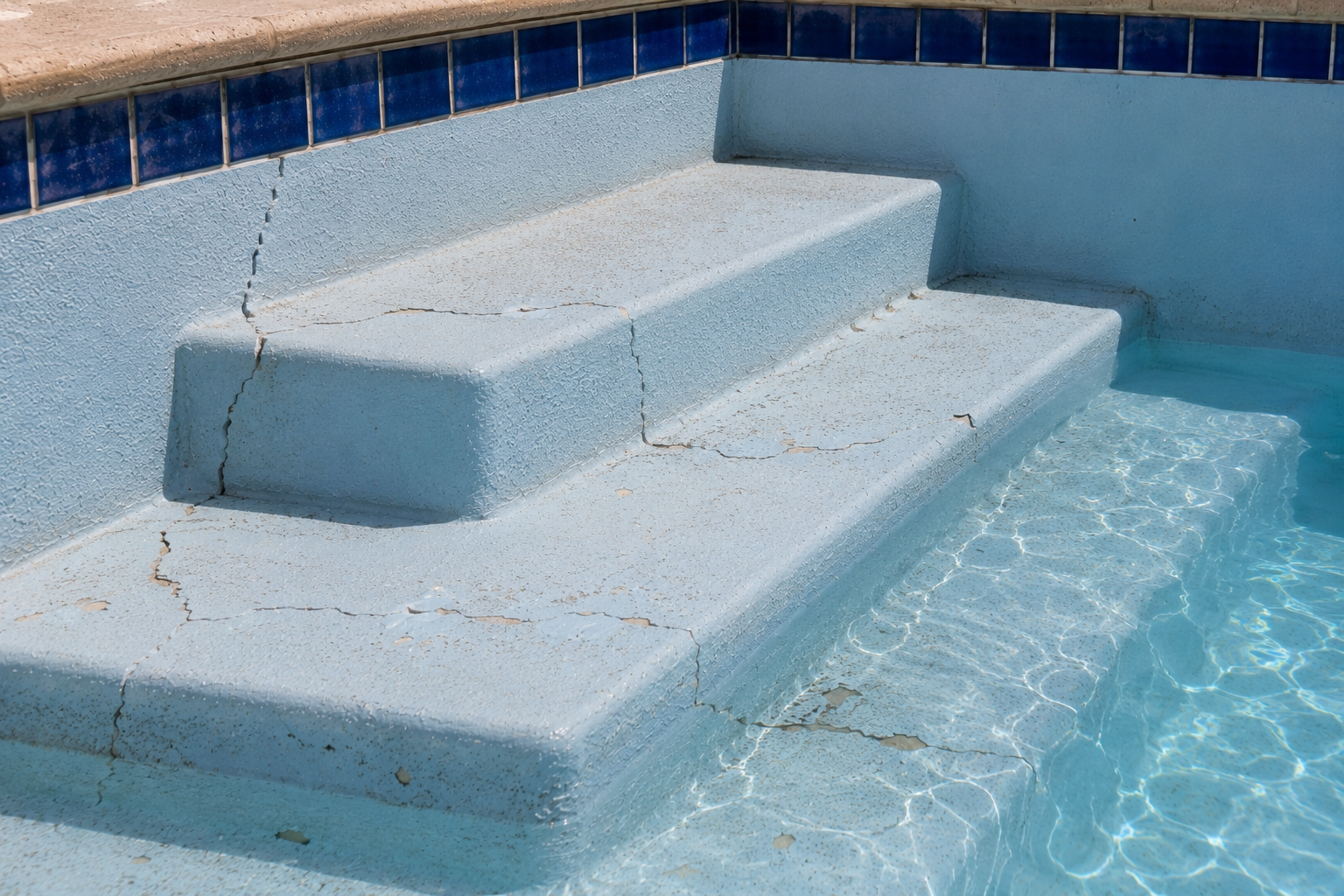
Cracked pool steps may result from ageing finishes, structural movement, poor previous repairs or damage beneath the marbelite or fibreglass lining. Absolute Pools assesses and repairs damaged swimming pool steps across Cape Town and surrounding areas.
Swimming pool steps are exposed to frequent foot traffic, changing water pressure and stress where the steps connect to the walls and floor. Cracking can develop in the outer pool finish or extend into the concrete, gunite or fibreglass structure beneath it.
Fine lines in the marbelite may be limited to the surface. Wider cracks, movement between the two sides or damage that repeatedly returns after patching can indicate a deeper problem.
Cracks may also allow water behind the surface finish, causing nearby marbelite to become hollow, loose or discoloured. Where the crack extends through the step structure or surrounds a fitting, the pool may begin losing water.
The correct repair depends on the depth, cause and extent of the damage. Covering the crack without checking the surrounding step can result in another failed patch.
Pool step cracks should be inspected when they become wider, sharp or accompanied by other signs of deterioration.
Warning signs include:
Cracks on steps deserve particular attention because swimmers place their weight on these areas when entering and leaving the pool.
Fill the form below and our team will be in touch with you shortly.
Hairline cracks are narrow surface lines in the marbelite or plaster finish.
They may form through ageing, shrinkage, chemical erosion or minor movement beneath the surface. Some remain cosmetic and stable, while others follow a deeper crack in the concrete step.
A hairline crack that becomes darker, wider or repeatedly grows algae should be inspected before it develops into a larger surface failure.
A structural crack extends beyond the marbelite and into the concrete or gunite step.
It may run vertically through the front face, continue across the tread or connect with a crack in the adjoining pool wall or floor.
Structural cracks can result from settlement, inadequate reinforcement, movement in the pool shell or poor construction of the step section.
These cracks require more than a thin surface filler. The damaged area may need to be opened, reinforced and rebuilt.
The junction between a pool step and wall is a common stress point.
Different sections of the pool may move slightly, creating a crack along the joint. Water can enter behind the finish and loosen the surrounding marbelite.
The repair should include the complete junction rather than treating only the visible line.
Cracking can develop where the bottom step connects with the pool floor.
This area may experience movement, poor bonding or settlement beneath the step structure. The crack may continue across the floor or cause a section of the step to sound hollow.
A floor-to-step crack should be checked for water loss and movement before resurfacing.
Fibreglass steps can crack through impact, ageing, poor support or movement in the underlying pool shell.
The damage may begin in the outer gel coat and extend into the laminate. Deeper cracks can allow water behind the fibreglass, leading to blistering, delamination and rough exposed fibres.
The damaged laminate should be removed back to secure material before the step is rebuilt and refinished.
Cracked tiles may be caused by impact or movement in the substrate beneath them.
When several tiles or grout joints crack along the same line, the underlying step is more likely to be moving. Replacing the tiles without repairing the substrate may cause the new installation to fail again.
The surrounding grout and step structure should be assessed together.
Fill the form below and our team will be in touch with you shortly.
Marbelite, plaster, fibreglass and grout gradually deteriorate through years of water exposure, brushing and chemical treatment.
Older finishes may become rough, porous and brittle before cracking. Steps often show wear earlier because they receive more foot traffic than the walls and deep floor.
An isolated surface crack may be repaired locally. Widespread cracking, peeling and roughness may support complete resurfacing.
Movement in the pool shell can place stress on steps, walls, benches and floor junctions.
Settlement, unstable soil, groundwater pressure or changes around the property may cause one section to move differently from another.
Structural movement should be addressed before a new marbelite or fibreglass finish is applied. A cosmetic surface repair may split again if the step remains unstable.
Pool steps require suitable reinforcement and secure connection to the main pool structure.
Insufficient reinforcement, weak concrete, poor compaction or inadequate bonding can allow cracks to develop over time.
The damage may become visible years after construction as normal water pressure and soil movement expose the weakness.
Some pool steps are added after the original pool was built.
If the new step structure was not tied securely into the existing shell, cracking can form along the connection. The new and old concrete may move independently.
A crack along the outline of an added step can indicate poor bonding or insufficient reinforcement between the two sections.
A crack may reopen when it was filled without removing loose material or correcting movement beneath it.
Rigid filler applied over a working joint can separate as soon as the step moves again. Patches placed over hollow marbelite may detach together with the surrounding finish.
The old repair should be removed so the full depth and condition of the crack can be assessed.
A crack can allow pool water between the marbelite and concrete step.
The trapped water weakens the bond and can cause nearby areas to become hollow, peel or break away.
Repairing only the visible crack may leave a larger section of loose marbelite in place. All poorly bonded material should be removed before the surface is restored.
Persistently low pH makes pool water corrosive.
It can erode cement-based finishes, weaken grout and expose aggregate. The step surface may become rough and develop fine cracks or pits.
Balancing the water helps prevent further deterioration but cannot restore material that has already cracked or separated.
Granular chlorine and other chemicals can settle on steps if they are added incorrectly.
Concentrated chemicals may bleach, etch or weaken the surface. Repeated exposure can create rough areas that eventually crack or flake.
Chemicals should be distributed according to suitable product instructions while the circulation system is working.
Acid washing removes a thin layer of cement-based material from the pool surface.
Repeated or overly strong acid washing can expose aggregate and weaken ageing marbelite. Steps may become rough, pitted and increasingly vulnerable to cracking.
A worn surface should be resurfaced rather than repeatedly acid washed to improve its appearance.
A filled pool experiences different pressure and temperature conditions from an empty one.
When the pool remains drained in direct sunlight, the steps and surrounding finishes can dry and heat unevenly. Existing cracks may widen, and weak marbelite can separate.
Cape Town’s hot summer sun can cause significant temperature changes inside an empty pool. Repair work should therefore proceed without unnecessary delays.
Uneven soil movement can affect the entire pool shell or one localised section.
Cracks may develop in the steps, pool wall and surrounding paving at the same time. Sinking paving or gaps near the coping can support concerns about ground movement.
Drainage and soil support may need attention before permanent step repairs are completed.
A leaking pipe, fitting or structural crack can release water into the ground around the pool.
The escaping water may wash away supporting soil and create voids beneath steps or adjoining paving. As support is lost, the step can crack or move further.
Leak detection should be completed where water loss or persistent wet ground accompanies the cracking.
Large tree roots can disturb soil, underground pipes and pool structures.
Roots may contribute to cracking when the damage is concentrated on one side of the pool. Heavy irrigation and poor garden drainage can also affect the ground supporting the step area.
The surrounding environment should be considered rather than treating the crack as an isolated surface defect.
Fill the form below and our team will be in touch with you shortly.
The tread is the horizontal area where swimmers place their feet.
A crack across the tread may be limited to the marbelite or continue into the concrete below. Water can enter the opening and loosen the surrounding finish.
Cracks on the tread can create sharp edges and should be repaired before fragments begin breaking away.
A vertical crack on the front face may result from structural movement, shrinkage or poor construction of the step.
The crack can continue through several step levels or connect with damage in the pool floor.
Where the two sides of the crack are no longer aligned, the step may require structural rebuilding rather than surface patching.
Step edges experience impact and regular foot traffic.
Marbelite may chip away from the corner, leaving a sharp and uneven edge. Fibreglass finishes can also crack where the step changes direction.
Damaged edges should be reshaped and restored so swimmers can enter the pool safely.
Fill the form below and our team will be in touch with you shortly.
A visible crack does not always mean that the pool is leaking.
The damage may be limited to the marbelite while the structural shell remains watertight. Water loss becomes more likely when the crack extends into the concrete, surrounds a fitting or continues into another part of the pool.
Leak detection can help determine whether the step crack is active or whether the pool has an unrelated pipe or fitting leak.
Wet paving near the step end of the pool may indicate a structural leak, damaged fitting or nearby underground pipe.
Water can move beneath paving before appearing at the surface, so the visible damp area may not sit directly above the source.
Persistent moisture can wash away bedding material and cause the paving to sink or separate.
A hollow sound suggests that the marbelite or fibreglass finish has separated from the underlying step.
The surface may remain in place temporarily before cracking, lifting or collapsing. Water entering through the crack can expand the hollow area.
All loose and poorly bonded material should be removed until secure edges are reached.
Fill the form below and our team will be in touch with you shortly.
Cracking frequently appears alongside peeling marbelite.
The finish may lift on both sides of the crack and release flakes into the pool. These fragments can be drawn into the cleaner, baskets and circulation system.
Widespread peeling around the steps may support resurfacing the entire shallow end or complete pool rather than applying several visible patches.
Roughness can develop through erosion, exposed aggregate, calcium scale and failed repairs.
A cracked and abrasive step can scrape swimmers’ feet and accelerate wear on automatic pool-cleaner components.
The cause of the roughness should be assessed together with the crack so the correct repair and finish are selected.
Dark, brown or rust-coloured staining can develop inside a pool step crack.
Black or green staining may be algae growing in the opening. Rust-coloured marks can indicate metal contamination or corrosion near the damaged section.
The stain should not simply be covered without checking the crack and surrounding material.
Fill the form below and our team will be in touch with you shortly.
Cracks provide protected areas where algae can establish itself.
The opening is difficult to brush, and sanitised water may not circulate deeply inside it. Black or green algae may repeatedly return along the same line.
The water condition should be treated, but the damaged step must still be repaired to remove the protected opening.
Some pools have fittings installed close to steps or benches.
Movement, failed sealing or damaged pipe connections can cause cracks to form around the fitting. The visible surface crack may be accompanied by water loss into the surrounding structure.
The fitting, seal and underground pipe connection should be checked before the step surface is rebuilt.
Cracking soon after resurfacing can indicate an underlying defect that was not repaired properly.
The new finish may follow movement in the old crack or separate where preparation and bonding were inadequate.
The crack should be opened and assessed rather than covered with another thin layer of marbelite.
Fill the form below and our team will be in touch with you shortly.
A crack appearing after relining may indicate movement in the underlying concrete, poor support or inadequate preparation.
The fibreglass may split along the original structural crack or begin lifting around the damaged area.
The cause beneath the lining must be corrected before the laminate is rebuilt.
Prolonged rain can saturate soil and increase groundwater pressure around the pool.
Poor drainage may soften supporting ground or expose existing movement. Cracks can become more noticeable around the steps, wall and nearby paving.
Cape Town’s wet winter periods can reveal drainage weaknesses that remain hidden during the dry season.
Certain soils contract during long dry periods.
Loss of support or changing soil moisture can contribute to movement around the pool shell. Cracks may appear in the steps, coping and paving before the rainy season begins.
The surrounding ground and drainage should be considered when cracks develop seasonally.
Fill the form below and our team will be in touch with you shortly.
Excavation, vibration, heavy equipment and new structural loads can disturb the ground around an existing pool.
The timing and location of the crack may provide clues about whether nearby construction contributed to the movement.
Underground plumbing near the step area should also be checked where excavation or landscaping took place.
A hairline crack is not automatically structural.
Some fine cracks affect only the marbelite or outer fibreglass finish. Concern increases when the crack widens, leaks, becomes stained or reopens after repair.
The surrounding step should be checked for hollow areas and movement before the damage is considered cosmetic.
Swimming should be limited when the crack has created sharp edges, loose material or unstable sections.
Steps are used when entering and leaving the pool, making even a small raised edge capable of scraping feet. Broken tiles, exposed fibreglass fibres and loose marbelite create additional hazards.
The water should also remain unused when poor clarity makes the damaged area difficult to see.
Fill the form below and our team will be in touch with you shortly.
Loose marbelite, broken grout and sharp edges can catch or wear automatic pool-cleaner components.
Tracks, wheels, footpads, hoses and diaphragms may deteriorate more quickly over damaged steps. Cleaners can also become trapped around raised repair patches.
Repairing the step surface can reduce repeated cleaner damage.
Local patching may be suitable when the crack is stable and the surrounding structure and finish remain secure.
Loose marbelite or fibreglass is removed, and the crack is opened back to sound material. The repair system is selected according to whether the damage affects the finish or the structure beneath it.
The new repair may remain slightly visible next to an older faded surface.
Patching is less reliable when the step is moving, several cracks are present or the surrounding finish is hollow.
Fill the form below and our team will be in touch with you shortly.
Structural repair is needed when the crack extends into the concrete or gunite step, causes displacement or allows water loss.
The affected area may need to be opened, reinforced and rebuilt using materials suitable for permanent submersion.
Active movement, inadequate support and nearby leaks should be corrected before the step is refinished.
Rebuilding may be more practical when the step has extensive cracking, hollow sections or movement between its parts.
A poorly attached step added during an earlier renovation may also require partial or complete reconstruction.
The new step should be tied securely into the existing pool structure and shaped correctly before marbelite or fibreglass finishing begins.
Resurfacing may be recommended when the step cracks occur alongside widespread roughness, peeling marbelite, exposed aggregate and several failed patches.
The structural damage is repaired first. The complete surface is then prepared for new marbelite or fibreglass relining.
Resurfacing should not be used to hide active cracks because movement can split the new finish.
Fill the form below and our team will be in touch with you shortly.
Leak detection helps confirm whether the step crack is allowing water to escape.
The assessment may include monitoring the water level, inspecting nearby fittings and checking the plumbing connected to the affected section.
A pool can have cracked steps and a separate pipe leak at the same time. Confirming the source prevents unnecessary rebuilding and repeated surface repairs.
Leak detection helps confirm whether the step crack is allowing water to escape.
The assessment may include monitoring the water level, inspecting nearby fittings and checking the plumbing connected to the affected section.
A pool can have cracked steps and a separate pipe leak at the same time. Confirming the source prevents unnecessary rebuilding and repeated surface repairs.
Fibreglass step cracks require removal of damaged gel coat and weak laminate.
The repair is extended beyond the visible crack so new fibreglass can bond with secure material. The step is then laminated, reshaped and finished with a compatible surface coating.
Movement or poor support beneath the step should be corrected before the new fibreglass is applied.
Fill the form below and our team will be in touch with you shortly.
Cracked and loose tiles are removed so the substrate can be inspected.
Structural cracks beneath the tiles are repaired before new waterproofing, adhesive, grout and tiles are installed.
Replacing only the visible broken tile can result in another failure when the underlying step remains cracked.
Absolute Pools examines the position, width and direction of the cracking and whether it extends into adjoining walls or the pool floor.
The step surface is checked for hollow areas, peeling marbelite, roughness, damaged fibreglass, loose tiles and failed previous repairs.
Water loss, wet paving and movement around the coping are considered where the crack may be structural or leaking.
The assessment determines whether local surface repair, structural reconstruction, leak repair or complete resurfacing is appropriate.
The repair depends on the pool type and extent of damage.
Small surface cracks may be repaired locally when the underlying step remains sound. Hollow and peeling finishes are removed before the repair is completed.
Structural cracks may require reinforcement and rebuilding of the affected step. Fibreglass steps are repaired with new laminate and a compatible finish.
Damaged tiles, grout, fittings and nearby coping can be repaired as part of the same project.
The pool may then be resurfaced or relined when the existing finish has deteriorated beyond reliable patch repairs.
Fill the form below and our team will be in touch with you shortly.
Repair active leaks and drainage problems before they weaken support around the pool.
Avoid leaving the pool empty longer than necessary, particularly during very hot or wet conditions. Maintain stable water chemistry to protect marbelite, grout and fibreglass finishes.
Address small cracks, hollow sounds and loose tiles before water enters behind the surface. Avoid dropping heavy objects onto steps or allowing concentrated chemicals to settle there.
Structural repairs should be completed before cosmetic resurfacing so the new finish is not placed over an unstable step.
Absolute Pools assesses and repairs cracked swimming pool steps across Cape Town and surrounding areas, including the Northern Suburbs, Southern Suburbs, Atlantic Seaboard, Cape Town City Bowl, West Coast suburbs and Helderberg.
Service areas include Durbanville, Bellville, Brackenfell, Kraaifontein, Parow, Goodwood, Milnerton, Table View, Parklands, Blouberg, Century City, Pinelands, Rondebosch, Claremont, Newlands, Constantia, Tokai, Wynberg, Plumstead, Hout Bay, Sea Point, Green Point, Camps Bay, Somerset West, Strand, Gordon’s Bay, Stellenbosch, Paarl and surrounding areas.
Fill the form below and our team will be in touch with you shortly.
Absolute Pools checks whether the damage is limited to the surface finish or extends into the concrete, gunite or fibreglass step structure.
We assist with pool step crack repairs, leak detection, structural repairs, marbelite resurfacing, fibreglass repairs and related tile and grout work.
Our focus is on repairing the full damaged area and its underlying cause rather than hiding movement beneath a temporary surface patch.
Cracked pool steps can become sharp, unstable and difficult to keep clean and may indicate deeper movement or water loss.
Contact Absolute Pools for pool step inspections, crack repairs and resurfacing across Cape Town and surrounding areas.
Fill the form below and our team will be in touch with you shortly.
WhatsApp us