

We provide specialized winterization services to safeguard your pool during the off-season, and when spring arrives, we handle the thorough opening process.
Recent Posts


Sign Up to get updates & news about us . Get Latest Deals from Walker's Inbox to our mail address.
Sign Up to get updates & news about us . Get Latest Deals from Walker's Inbox to our mail address.
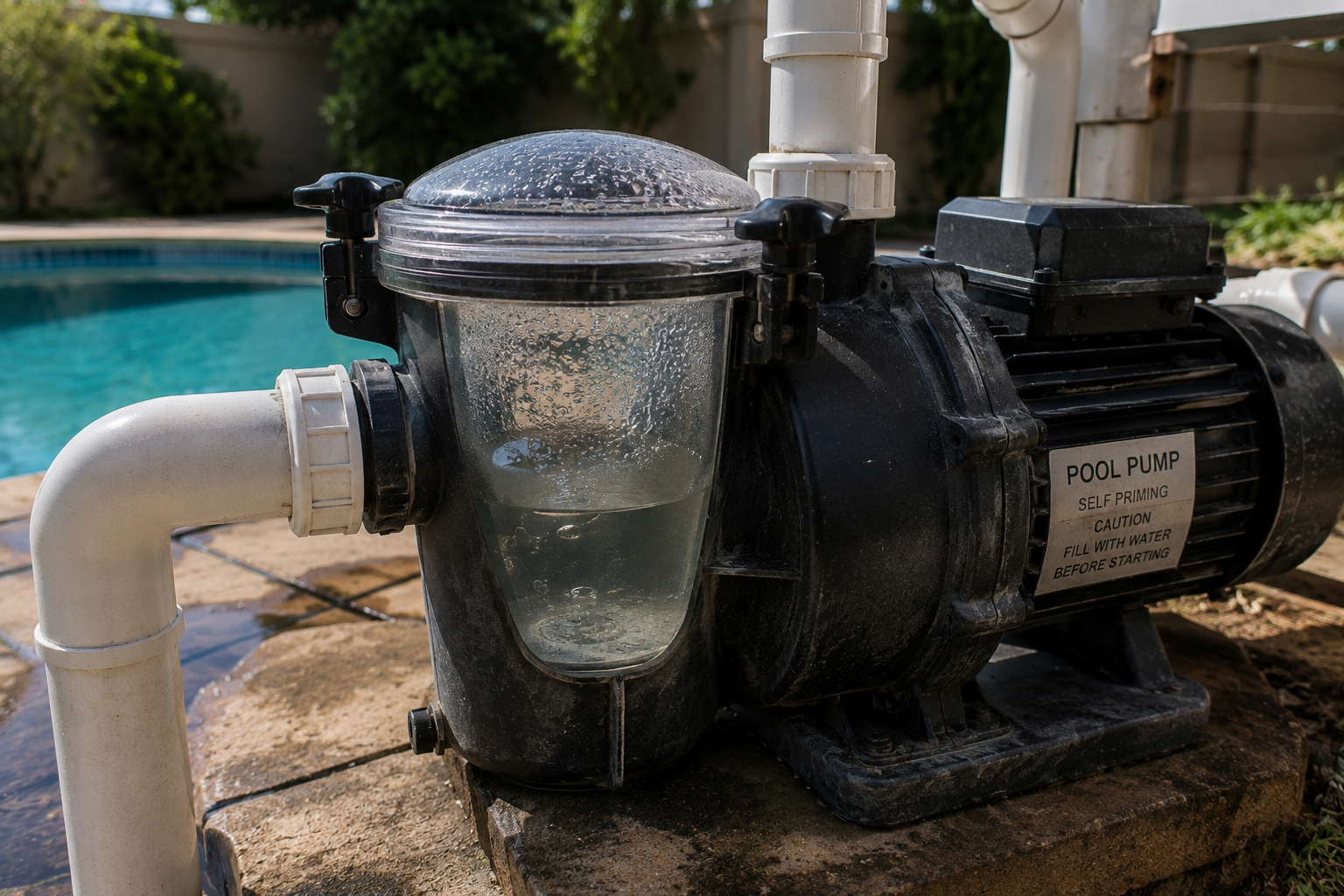
If your pool pump will not fill with water, keeps drawing air or loses prime after switching off, Absolute Pools can diagnose the circulation fault and provide pool pump and suction-system repairs across Cape Town and surrounding areas.
A pool pump is primed when its housing and suction plumbing are filled with water and it can draw a steady flow from the pool. When the pump cannot prime, it may run with little or no water, produce bubbles, make unusual noises or fail to circulate the pool properly.
The problem is often caused by air entering the suction side of the system. Common sources include a low pool water level, blocked skimmer, damaged cleaner hose, loose pump lid, worn O-ring, closed valve or leaking suction pipe.
A pump that does not prime should not be left running for long. Pool pumps depend on moving water for cooling and lubrication, and dry operation can damage seals and internal components.
A pump that has lost prime may not be completely empty. It can show several different symptoms depending on how much water and air are entering the system.
You may notice:
These symptoms can be caused by the pump itself, but the fault is often somewhere between the pool and the pump.
Fill the form below and our team will be in touch with you shortly.
The pool water level must be high enough for the skimmer to supply a steady flow to the pump.
When the water falls too low, the skimmer can draw a mixture of water and air. The pump basket may never fill completely, and bubbles may appear from the return jets.
Cape Town’s hot, dry and windy summer weather can increase evaporation. A leaking pool, recent backwashing or faulty automatic filler can also lower the water level.
Adding water may restore prime, but repeated water loss should still be investigated.
Leaves, insects and other debris can restrict water flowing through the skimmer.
The pump may struggle to draw enough water, particularly when the automatic cleaner is connected. Flow can become uneven, and the pump may appear to lose prime.
The skimmer basket should be emptied and checked for cracks or poor fitting.
The pump basket protects the impeller from larger debris.
When it becomes blocked, water flow through the pump is restricted. The pump may sound strained, circulation may weaken and the basket housing may not remain full.
The pump should be switched off before the lid is opened. After cleaning, the lid and seal must be refitted correctly.
The skimmer weir is the hinged flap at the skimmer entrance.
If it remains stuck in the raised position, insufficient water can enter the skimmer. The pump may then draw air or fail to prime.
Debris, damaged hinges or a poorly fitted replacement weir can prevent normal movement.
Cleaner hoses can crack, split or develop loose connections over time.
A damaged hose section may draw air into the suction line, especially when part of the hose sits near the water surface. The pump may lose prime while the cleaner is connected and operate normally after it is removed.
Each hose section should be checked for cracks, worn ends and loose joins.
The vacuum plate and cleaner hose connection must seal securely at the skimmer.
A loose, damaged or incorrectly fitted connection can allow air into the system. This may cause bubbles, weak suction and poor pump priming.
Removing the cleaner connection can help indicate whether the fault is linked to the cleaner setup.
The pump lid must create an airtight seal.
If the lid is loose, cross-threaded, cracked or not seated evenly, air may enter while the pump runs. Because the suction side pulls air inward, there may be no visible water leaking from the lid.
The lid should be refitted carefully without excessive force.
The O-ring beneath the pump lid seals the housing against air entry.
A dry, flattened, cracked, stretched or dirty O-ring may prevent the pump from priming. Even a small piece of grit beneath the seal can create an air gap.
The seal may need cleaning, suitable lubrication or replacement.
Drain plugs are normally installed near the lower section of the pump housing.
A loose plug or damaged plug seal can allow air into the pump. The area may remain dry while the pump is operating because air is being drawn inward.
The plugs should be checked for damaged threads and worn seals.
Pool systems may have separate valves for the skimmer, vacuum point, main drain, heating system or water feature.
A closed or partly closed suction valve can restrict water entering the pump. The pump may struggle to prime or repeatedly lose flow.
Valve positions should be checked before assuming that the pump itself is faulty.
A valve can appear open while still allowing air through a worn lid seal, cracked body or internal component.
The priming problem may change when individual suction lines are isolated. This can help identify the affected valve or line.
Damaged valve bodies may need replacement rather than repeated sealing.
Pipe joints, unions and elbows before the pump can develop small cracks or failed seals.
These faults may draw air into the system without releasing visible water. The connection can therefore look completely dry while preventing the pump from maintaining prime.
Older plumbing and previous repairs should be checked for movement and poor alignment.
A damaged underground pipe between the pool and pump can draw air whenever the system operates.
The same fault may allow water to escape into the ground after the pump switches off. Other signs can include unexplained water loss, wet paving, air bubbles and weak pool cleaner movement.
Targeted leak detection may be needed before paving is lifted.
Leaves, stones, cleaner parts and other debris can become lodged in the suction plumbing.
A partial blockage may allow some water through while preventing the pump from reaching a stable prime. A complete blockage can stop flow entirely.
The blockage should be located and cleared without damaging the pipework.
Small debris can pass through a damaged or incorrectly fitted basket and become trapped in the pump impeller.
A blocked impeller may prevent the pump from moving enough water even when the housing is full. The pump may run but produce weak or no return flow.
The pump must be isolated safely before the impeller is inspected.
A crack in the pump housing, lid or suction inlet can allow air into the system.
Some cracks become visible only while the pump is running or after the housing heats up. Water staining, mineral deposits and previous repairs may indicate where the fault has developed.
A cracked housing may require component replacement or a new pump, depending on its condition.
Fill the form below and our team will be in touch with you shortly.
Priming problems commonly begin after the pump basket has been cleaned.
The pump housing may not have been refilled with water, the lid may not be seated correctly or the O-ring may have moved while the lid was removed.
Before restarting the pump, the housing should be filled with clean pool water where required. The lid seal should be checked and the valves returned to the correct operating position.
If the pump still cannot draw water, another suction fault may be present.
A pump that works while running but loses prime after shutdown may have an air leak or a valve that allows water to drain back towards the pool.
Possible causes include a loose lid, damaged O-ring, leaking suction pipe, faulty non-return valve or poor pipe alignment.
The pump basket may gradually empty after the system stops. On the next startup, the pump must remove the trapped air before circulation can begin.
Repeated loss of prime should be repaired rather than accepted as normal.
A pump may initially fill with water before the basket level drops again.
This can happen when the skimmer supplies water briefly but then begins drawing air. A low pool level, blocked basket, stuck weir or damaged cleaner hose may be responsible.
It can also indicate that a suction pipe or connection opens under operating conditions.
Observing the skimmer and pump basket at the same time can help identify where the change begins.
Fill the form below and our team will be in touch with you shortly.
If the pump operates normally without the cleaner but loses prime once the cleaner is connected, the fault is likely linked to the hose, vacuum plate or cleaner connection.
A cracked hose section can draw air. Too many hose sections, a blocked cleaner or an incorrectly adjusted suction valve can also restrict water flow.
Each section should be inspected before the pump is blamed.
Air may enter the system during backwashing or rinsing.
The pump should regain prime after the multiport valve is returned to the filter position and normal circulation begins. Persistent failure may indicate that the water level is too low, a valve is incorrectly positioned or the pump lid seal has been disturbed.
The pump must be switched off before changing the multiport valve position.
A low water level can allow the skimmer to pull air into the suction line.
After restoring the water level, the pump may still contain a large amount of trapped air. The housing may need to be filled before restarting.
The reason for the low water level should also be checked. A leaking pool can repeatedly cause the pump to lose prime and run dry.
Fill the form below and our team will be in touch with you shortly.
A newly installed pump can still struggle to prime when the fault lies elsewhere in the system.
The new pump may expose an existing suction leak, blocked pipe, poor valve position or damaged cleaner hose. Incorrect pipe sizing or installation can also affect priming.
The complete suction route should be assessed before concluding that the replacement pump is defective.
Air may remain trapped in the pipes after plumbing work.
The system should normally clear this air after a short priming period. If it does not, a joint may not be sealed correctly, a valve may be closed or the pipe alignment may be preventing normal flow.
Recently repaired fittings should be checked for air entry and water leaks.
Repair is often worthwhile when the pump motor and housing remain in good condition and the fault is limited to a seal, lid, capacitor, impeller or fitting.
Replacement may be more practical when the housing is cracked, the motor is badly damaged, parts are unavailable or the pump repeatedly fails.
The suction system should still be checked before replacement. Installing a new pump will not solve a leaking pipe, blocked line or low water-level problem.
Fill the form below and our team will be in touch with you shortly.
Absolute Pools provides pool pump priming diagnosis and repairs across Cape Town and surrounding areas, including the Northern Suburbs, Southern Suburbs, Atlantic Seaboard, Cape Town City Bowl, West Coast suburbs and Helderberg.
Service areas include Durbanville, Bellville, Brackenfell, Kraaifontein, Parow, Goodwood, Milnerton, Table View, Parklands, Blouberg, Century City, Pinelands, Rondebosch, Claremont, Newlands, Constantia, Tokai, Wynberg, Plumstead, Hout Bay, Sea Point, Green Point, Camps Bay, Somerset West, Strand, Gordon’s Bay, Stellenbosch, Paarl and surrounding areas.
Absolute Pools looks beyond the pump motor to assess the water level, skimmer, cleaner hose, valves, suction pipes and connected equipment.
We assist with pool pump repairs, suction pipe repairs, skimmer box repairs, leak detection, equipment repairs and circulation faults.
Our focus is on identifying why the pump cannot draw water and restoring reliable circulation without replacing equipment unnecessarily.
A pump that repeatedly runs dry or loses prime can damage its seals, reduce filtration and cause the pool water to deteriorate.
Contact Absolute Pools for pool pump fault diagnosis and repairs across Cape Town and surrounding areas.
Fill the form below and our team will be in touch with you shortly.
WhatsApp us