

We provide specialized winterization services to safeguard your pool during the off-season, and when spring arrives, we handle the thorough opening process.


Sign Up to get updates & news about us . Get Latest Deals from Walker's Inbox to our mail address.
Sign Up to get updates & news about us . Get Latest Deals from Walker's Inbox to our mail address.
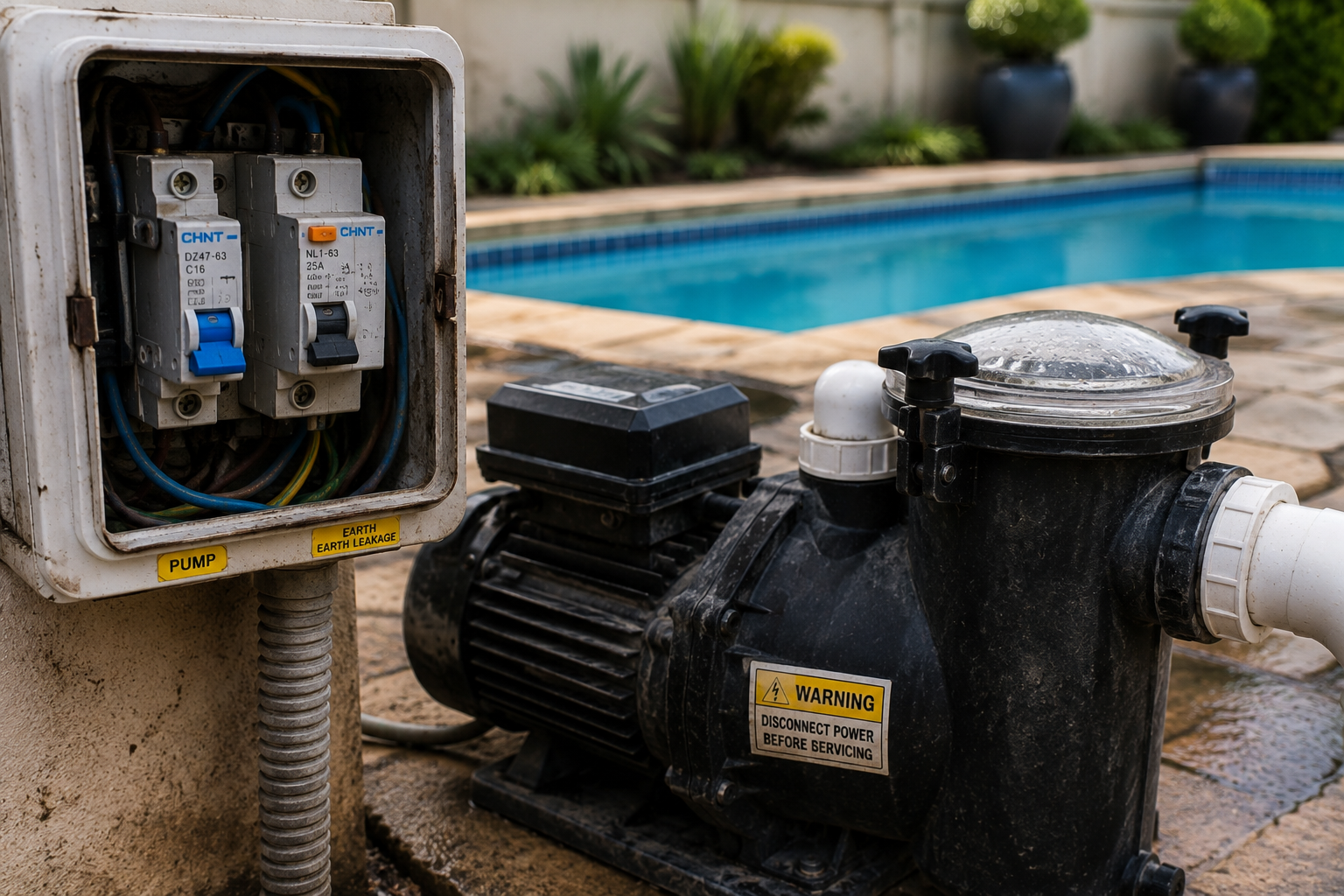
A pool pump that repeatedly trips the power may have an electrical fault, seized motor, damaged capacitor, water ingress or restricted water flow. Absolute Pools diagnoses pool pump problems and provides practical repair solutions across Cape Town and surrounding areas.
A swimming pool pump draws electrical current whenever it starts and continues using power while circulating water. If the motor, wiring or connected equipment develops a fault, the circuit breaker or earth-leakage protection may switch off to reduce the risk of electrical damage.
The pump may trip immediately when switched on, run for a few seconds before stopping or operate for several minutes before the power cuts out. Each pattern can point towards a different problem.
Common causes include a faulty capacitor, seized motor, damaged bearings, blocked impeller, water entering the motor, deteriorated wiring, loose connections or an overloaded electrical circuit.
A tripping pump should not be reset repeatedly. The protection device may be responding to a genuine electrical fault that requires proper investigation.
The most obvious sign is a circuit breaker or earth-leakage switch that moves to the off position when the pool pump starts.
The pump may also hum without turning, start slowly, become unusually hot, make grinding noises or stop after running for a short period. A burning smell, visible corrosion, water around electrical connections or repeated problems after rain can indicate a more serious fault.
The filtration system may remain off long enough for the pool to become cloudy or green. The automatic cleaner may stop moving, and chlorine may not circulate properly.
Fill the form below and our team will be in touch with you shortly.
The capacitor helps the motor develop enough power to start.
When it weakens or fails, the pump may hum, struggle to turn or trip the circuit breaker shortly after being switched on. The motor may sometimes start after several attempts, but repeated resetting can place additional strain on the windings.
A faulty capacitor should be tested and replaced with the correct component rather than bypassed.
A motor can seize when its bearings fail, internal parts corrode or the shaft becomes difficult to turn.
The pump may draw excessive electrical current while trying to start, causing the breaker to trip. A seized motor may also produce a humming sound without moving water.
The pump should be switched off promptly because continued attempts can overheat the motor and damage additional components.
Leaves, stones, pieces of cleaner equipment and other debris can become lodged in the pump impeller.
A blockage makes it harder for the motor to turn and move water. The increased load can cause the motor to overheat or draw more current than the circuit allows.
A blocked impeller may also cause weak return flow, poor suction and unusual mechanical noise.
Pool pump bearings support the rotating motor shaft.
As they wear, the pump may become noisy, vibrate or require more effort to run. Severely damaged bearings can cause the motor to bind, overheat and trip the power.
Grinding, screeching or metallic noises should be investigated before the motor fails completely.
Pool equipment is installed outdoors and can be exposed to rain, irrigation, leaking pipes and flooding.
Water entering the motor, electrical terminal box or cable connection can cause earth leakage and trip the protection switch. Corrosion may remain after the visible water has dried, causing the fault to return.
The source of the moisture should be repaired before the pump is placed back into service.
Electrical cables and connections can deteriorate because of age, heat, moisture, rodents or poor previous repairs.
Damaged insulation may allow current to leak to earth. Loose terminals can create heat and inconsistent operation. A fault may appear only when the cable moves, becomes wet or warms during operation.
Pool pump wiring should be assessed safely by a suitably qualified person.
A loose connection at the motor, timer, isolator, distribution board or junction box can create resistance and heat.
The pump may operate intermittently, trip after several minutes or stop when vibration affects the connection.
Discoloured terminals, melted insulation and burning smells can indicate that a loose connection has already overheated.
A pump may run normally when cold and trip only after heating up.
Possible causes include worn bearings, restricted ventilation, low voltage, overloaded motor windings, poor water flow or a pump operating outside its intended conditions.
Once the motor cools, it may restart and repeat the same cycle. This pattern should not be treated as normal operation.
A pool pump requires an electrical supply and protective device suited to its motor size and starting current.
A breaker that is incorrectly rated may trip even when the pump is functioning normally. However, changing the breaker without checking the pump and wiring can create a safety risk.
The circuit, cable size, motor rating and connected equipment should be considered together.
A timer or contactor controls when the pool pump receives power.
Burnt contacts, loose terminals, moisture or internal failure can cause intermittent operation and tripping. The fault may seem to come from the pump even though the problem is can cause intermittent operation and tripping. The fault may seem in the control equipment.
The timer should be checked when the pump trips only during scheduled operation or behaves differently when switched manually.
A worn mechanical seal can allow pool water to leak between the pump housing and motor.
The first sign may be water dripping beneath the pump. If the leak continues, moisture can reach the bearings or electrical motor components.
Repairing the seal early can prevent a relatively small leak from damaging the motor.
Fill the form below and our team will be in touch with you shortly.
A pump that trips the moment power is applied may have a direct electrical fault, short circuit, severe earth leakage or seized motor.
The problem can also occur when the start capacitor has failed and the motor cannot begin turning.
The pump should remain switched off until the electrical and mechanical components have been checked. Repeatedly resetting the breaker can worsen the fault or damage the protective equipment.
A pump that runs briefly before tripping may be struggling to start under load.
The impeller may be blocked, the shaft may be tight or the capacitor may not be providing sufficient starting assistance. The motor may also be drawing excessive current because of internal damage.
Listening for humming, grinding or uneven startup can provide useful clues, but the pump should not be allowed to repeat the cycle for extended periods.
Delayed tripping often points towards overheating or an electrical fault that worsens as the motor warms up.
Worn bearings, restricted cooling, damaged windings and poor electrical connections can all produce this pattern. The pump may restart after cooling and then trip again.
A motor that becomes excessively hot should be switched off before permanent damage occurs.
Fill the form below and our team will be in touch with you shortly.
Earth-leakage protection responds when electrical current flows along an unintended path.
Water ingress, damaged insulation, faulty wiring or a deteriorated motor can cause this type of trip. Pool lights, chlorinators, heat pumps and other equipment connected to the same circuit may also be responsible.
The affected equipment should be isolated and tested properly. Electrical protection should never be bypassed to keep the pump running.
A circuit breaker generally responds to excessive current or a short circuit.
The motor may be overloaded, seized or internally damaged. The circuit may also be carrying several devices at once, or the breaker may have deteriorated.
The pump, wiring and protective device should be assessed together before any component is replaced.
Cape Town’s winter rain can expose weaknesses in outdoor pool electrical installations.
Water may enter the pump motor, timer box, isolator, junction box or damaged conduit. Equipment boxes with broken seals or poorly fitted covers are particularly vulnerable.
The pump may trip during rain, shortly afterwards or only when the damp equipment is switched on. The problem can disappear after drying and return during the next wet period.
The moisture source and damaged components should be repaired rather than relying on temporary drying.
Fill the form below and our team will be in touch with you shortly.
Poor drainage, leaking pipes or heavy rain can allow water to collect around the pool pump.
Even when the motor appears to sit above the water, moisture can enter cable connections, terminal boxes and lower motor components.
The electrical supply should remain isolated until the area has dried and the equipment has been checked. The cause of the flooding should also be corrected to prevent the fault from returning.
A replacement motor can still trip if the underlying problem was not limited to the old motor.
The impeller may be blocked, the electrical supply may be unsuitable or water may be entering through a damaged pump seal. Incorrect wiring or mismatched components can also cause startup problems.
The complete pump assembly and electrical circuit should be checked rather than assuming the new motor is defective.
A new capacitor will not solve a seized shaft, damaged winding, poor connection or incorrect electrical supply.
The replacement capacitor must also match the motor’s required specification. An unsuitable component may cause unreliable startup or further motor damage.
If the pump continues tripping, additional mechanical and electrical testing is needed.
Fill the form below and our team will be in touch with you shortly.
A humming motor is receiving power but is not turning normally.
The capacitor may have failed, the impeller may be blocked or the shaft may be seized. The motor can draw high current while stationary, causing the breaker to trip.
The pump should be switched off instead of being repeatedly restarted.
Grinding, rattling, screeching or heavy vibration can indicate mechanical resistance inside the pump or motor.
Worn bearings, impeller damage, debris and misalignment can increase the electrical load until the circuit trips.
Repairing the mechanical fault early may prevent the motor windings from overheating.
Pool pump motors become warm during normal operation, but excessive heat is a warning sign.
Restricted ventilation, worn bearings, poor voltage, damaged windings or heavy mechanical load can cause overheating. The thermal protection inside some motors may switch the pump off before the main breaker trips.
The equipment area should have adequate airflow and should not be covered tightly while the pump operates.
Fill the form below and our team will be in touch with you shortly.
A blocked cleaner, restricted hose or incorrectly adjusted suction valve can reduce water flow through the pump.
Poor flow may contribute to cavitation and overheating, although a cleaner fault alone does not usually cause an immediate electrical trip.
If the pump operates normally after the cleaner is disconnected, the cleaner, hose, suction setting and pump flow should be assessed.
A pump that cannot draw water may overheat or operate under abnormal conditions.
Low water levels, blocked baskets, closed valves, suction leaks and blocked impellers can all reduce flow. The pump may also have lost prime.
The circulation fault and electrical trip should be investigated together rather than treating them as unrelated problems.
A heavily restricted filter increases resistance in the circulation system.
The pump may work harder, produce poor flow and operate at an unsuitable pressure. While a dirty filter does not always cause electrical tripping directly, it can contribute to overheating and equipment strain.
The filter pressure, sand condition and multiport valve should be checked as part of the system assessment.
Fill the form below and our team will be in touch with you shortly.
A low water level can cause the pump to draw air and lose prime.
Running with insufficient water may overheat the mechanical seal and affect the pump’s cooling. The motor may eventually trip through thermal protection or develop further damage.
The water level should be restored, but the reason it dropped should also be identified.
Yes. Pool lights, salt chlorinators, heat pumps, timers and other equipment may share the same electrical circuit or earth-leakage protection.
The pump may appear responsible because the trip occurs during the filtration cycle, even though another device is faulty.
Individual equipment may need to be isolated and tested to identify the actual source.
A circuit breaker or earth-leakage switch is designed to respond to unsafe electrical conditions.
Repeated resetting can expose damaged wiring and equipment to continued current. It can also cause further overheating or allow water-related faults to worsen.
The pump should remain off when the protection device trips repeatedly, especially if there is water near the equipment, a burning smell or visible cable damage.
Fill the form below and our team will be in touch with you shortly.
Confirm whether the pump trips immediately or only after running for a period. Note whether the circuit breaker or earth-leakage switch is affected.
Check for obvious water around the pump, damaged cables, flooding, unusual noise or a burning smell without touching exposed electrical components.
The pool water level, baskets and visible plumbing can be checked safely, but electrical covers and motor wiring should not be opened without the necessary skills.
Absolute Pools considers both the pump and the wider circulation system.
The assessment may include the pump housing, motor, capacitor, impeller, bearings, seals, water flow, pipework and visible electrical condition. The timing of the trip and whether it follows rain or overheating can help narrow down the fault.
Where specialised electrical testing or wiring work is required, it should be completed safely by a qualified electrician.
The objective is to identify whether the pump can be repaired reliably or whether replacement is the more practical option.
The repair depends on the confirmed fault.
A blocked impeller may need cleaning, while worn bearings, seals or capacitors may require replacement. Leaking plumbing should be repaired before water reaches the motor.
Damaged timers, cables and electrical connections may require specialised electrical repair. A badly corroded, cracked or internally damaged motor may need replacement.
The pump should be tested under normal operating conditions after the repair.
Fill the form below and our team will be in touch with you shortly.
Repair is often worthwhile when the housing and motor remain in reasonable condition and the fault is limited to a replaceable component.
Replacement may be more practical when the motor windings are damaged, the housing is cracked, corrosion is extensive or the pump has repeatedly failed.
The new pump should be correctly sized for the pool, filter and plumbing system. Installing a larger pump without considering the full system can create unnecessary pressure and operating problems.
The equipment area should drain properly and prevent water from pooling around the pump.
Timer boxes, isolators and junction boxes should close securely and remain protected from rain and irrigation. Leaking pipes and pump seals should be repaired before they allow water to reach electrical components.
Regular attention to unusual noise, overheating and corrosion can help identify problems before the pump begins tripping repeatedly.
Absolute Pools diagnoses and repairs pool pumps that keep tripping across Cape Town and surrounding areas, including the Northern Suburbs, Southern Suburbs, Atlantic Seaboard, Cape Town City Bowl, West Coast suburbs and Helderberg.
Service areas include Durbanville, Bellville, Brackenfell, Kraaifontein, Parow, Goodwood, Milnerton, Table View, Parklands, Blouberg, Century City, Pinelands, Rondebosch, Claremont, Newlands, Constantia, Tokai, Wynberg, Plumstead, Hout Bay, Sea Point, Green Point, Camps Bay, Somerset West, Strand, Gordon’s Bay, Stellenbosch, Paarl and surrounding areas.
Fill the form below and our team will be in touch with you shortly.
Absolute Pools looks at the pump motor, water flow, impeller, seals, plumbing and visible electrical condition before recommending repairs.
We assist with pool pump repairs, equipment leaks, circulation problems, blocked impellers and pump replacement where necessary.
Our focus is on identifying the actual cause of the trip and restoring reliable pool circulation without replacing working components unnecessarily.
A pool pump that repeatedly trips the circuit may have an electrical or mechanical fault that can worsen if the pump is continually restarted.
Contact Absolute Pools for pool pump fault diagnosis and repairs across Cape Town and surrounding areas.
Fill the form below and our team will be in touch with you shortly.
WhatsApp us