

We provide specialized winterization services to safeguard your pool during the off-season, and when spring arrives, we handle the thorough opening process.
Recent Posts


Sign Up to get updates & news about us . Get Latest Deals from Walker's Inbox to our mail address.
Sign Up to get updates & news about us . Get Latest Deals from Walker's Inbox to our mail address.
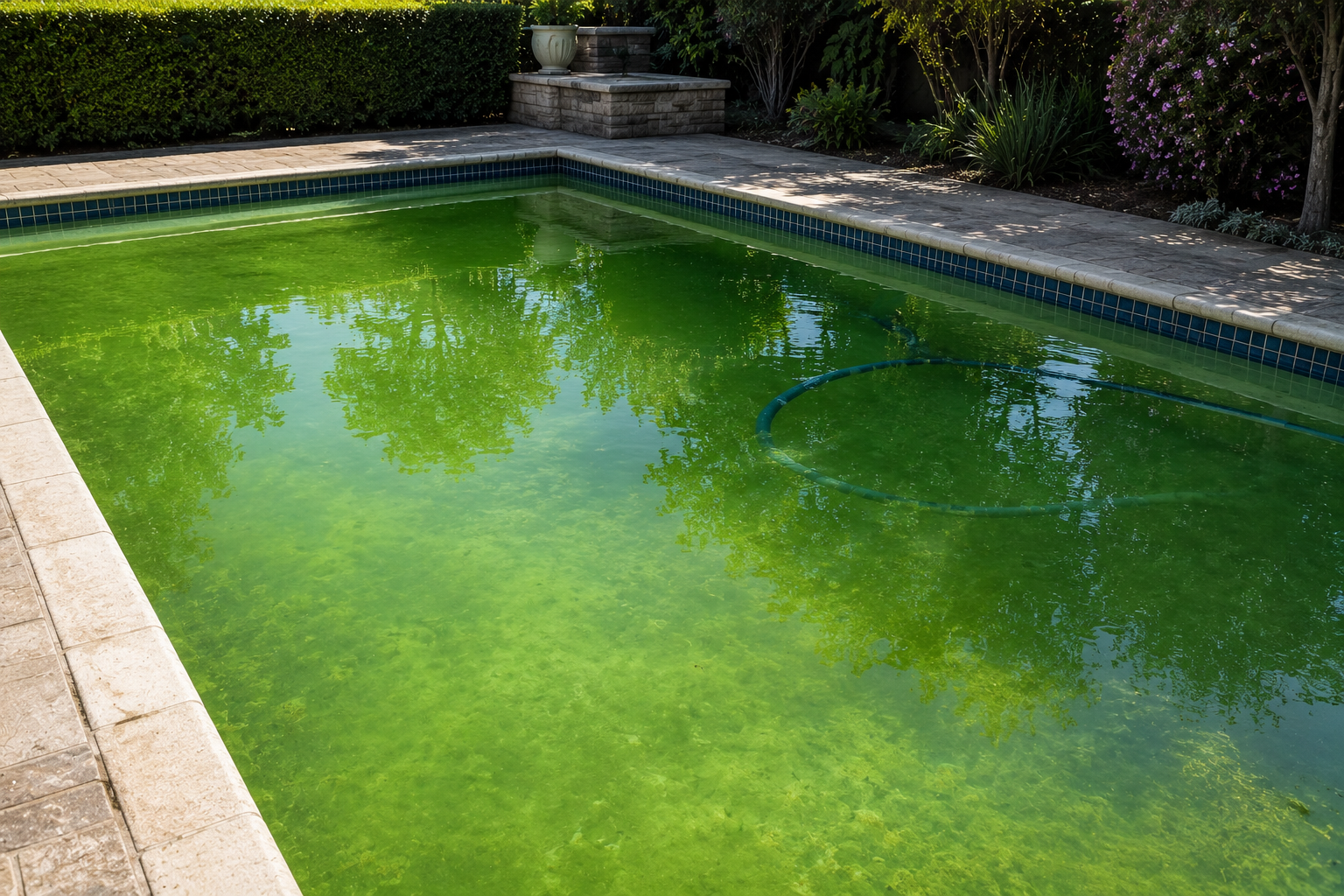
If your swimming pool repeatedly turns green after treatment, the problem may involve poor circulation, ineffective filtration, incorrect water balance, hidden algae or faulty pool equipment. Absolute Pools provides recurring green pool diagnosis and recovery across Cape Town and surrounding areas.
A swimming pool turns green when algae grows faster than the sanitation and filtration system can control it. Chlorine may kill the visible algae temporarily, but the pool can become green again when the underlying cause remains unresolved.
Common causes include insufficient chlorine, unsuitable pH, short pump operating times, dirty filter sand, weak circulation, blocked baskets, salt chlorinator faults and algae remaining inside hoses, fittings or poorly circulated areas.
Cape Town’s warm summer temperatures and strong sunlight can increase chlorine demand. Wind also carries dust, leaves and organic debris into outdoor pools, giving algae additional material to feed on.
A pool that repeatedly turns green needs more than another dose of chemicals. The water chemistry, circulation system and filtration equipment should be considered together.
Fill the form below and our team will be in touch with you shortly.
Chlorine controls algae and harmful microorganisms in swimming pool water.
When the available chlorine falls too low, algae can begin growing before the water visibly changes colour. The pool may appear slightly dull at first and then become green quickly during warm weather.
Low chlorine can result from insufficient dosing, heavy pool use, rainwater, sunlight, organic debris or a salt chlorinator that is not producing enough chlorine.
Treating the pool once without maintaining an appropriate chlorine level allows the algae to return.
A pool can receive chlorine and still turn green when the chlorine demand is unusually high.
Leaves, soil, dead algae, sunscreen, body oils and other organic contaminants consume chlorine. A neglected pool may use up an initial treatment before the algae has been fully controlled.
The pool should be cleaned physically as well as chemically. Removing debris reduces the amount of contamination the chlorine must overcome.
Chlorine becomes less effective when the pool pH rises too high.
The water may contain measurable chlorine while algae continues growing because the available chlorine is not working efficiently. High pH can also contribute to cloudy water and mineral deposits.
Chemical adjustments should be based on accurate water testing. Continually adding chlorine without correcting the pH can waste chemicals and leave the pool green.
Very low pH does not normally cause green algae directly, but it can create corrosive water and damage pool surfaces, seals and equipment.
Unstable water chemistry can also make regular chlorine control more difficult. The pH and alkalinity should be balanced together rather than corrected through repeated guesswork.
Outdoor pools often use stabiliser to protect chlorine from rapid breakdown in sunlight.
Too little stabiliser can allow sunlight to consume chlorine quickly, particularly during Cape Town’s bright summer days. Too much stabiliser can reduce chlorine effectiveness and make algae more difficult to control.
The stabiliser level should be measured before additional products are added. Continually using stabilised chlorine without testing can allow the level to build up over time.
A saltwater pool still depends on chlorine. The chlorinator simply produces it from dissolved salt.
A scaled cell, low salt level, damaged electrode, poor water flow or control fault can reduce chlorine production. The display may appear active even when the cell is no longer producing effectively.
The chlorinator output should be considered together with pump run time, water temperature, salt concentration and visible cell condition.
A functioning chlorinator can only produce chlorine while water is flowing through it.
If the pump schedule is too short, the total daily chlorine production may be insufficient. Increasing the chlorinator percentage alone may not compensate for a very limited filtration cycle.
The pump and chlorinator schedule should suit the pool size, season, water temperature and level of use.
Filtration and chemical circulation occur while the pool pump operates.
A short pump schedule may leave large parts of the water insufficiently filtered. This is particularly noticeable during warm weather, after heavy use or when the pool contains a large amount of debris.
Longer operating hours can help when the system is otherwise functioning correctly. They will not solve a blocked filter, weak pump or damaged chlorinator.
The pool pump may run without moving enough water to control algae effectively.
Blocked baskets, a clogged impeller, suction leaks, closed valves and worn pump components can reduce flow. The return jets may feel weak, and the automatic cleaner may move slowly or stop.
Poor circulation creates areas where chlorine distribution and filtration are inadequate. Algae can then establish itself on steps, walls, corners and the pool floor.
Return jets help move treated water around the swimming pool.
When the jets are directed poorly, some areas may receive strong surface movement while deeper sections remain stagnant. Steps, corners and areas behind ladders can become recurring algae zones.
Adjusting return direction may improve water movement, although it cannot compensate for a damaged pump or blocked filter.
A sand filter collects dirt, algae and fine particles as water passes through the filter bed.
As the filter becomes dirty, pressure rises and circulation weakens. Less water is filtered during each pump cycle, making it easier for algae to return.
Backwashing may restore flow when the sand is simply dirty. A filter that blocks again quickly may need further servicing.
Filter sand can become contaminated with oils, minerals and organic residue over time.
The sand may compact and restrict flow or develop channels that allow water to bypass proper filtration. The pump continues running, but fine debris and dead algae remain in the pool.
A filter sand change may be required when backwashing no longer restores reliable filtration.
Broken filter laterals can allow sand and unfiltered material to return through the pool jets.
The pool may remain cloudy or develop algae repeatedly because the filter is no longer holding its media or directing water correctly.
Sand collecting beneath the return jets is a strong indication that internal filter components should be inspected.
The multiport valve controls whether water passes through the filter, waste line or another route.
A damaged internal gasket or rotor can allow water to bypass filtration. The handle may be set to filter while part of the water takes an incorrect route.
Water may also escape through the waste line during normal filtration, gradually lowering the pool level and disrupting chemical balance.
Leaves and debris inside the baskets restrict the amount of water reaching the pump.
The automatic cleaner may stop moving, the pump basket may contain air and return flow may become weak. Reduced filtration allows suspended material and algae to remain in the pool.
The baskets should be cleaned regularly, especially during Cape Town’s windy periods.
Small debris can pass through the pump basket and become trapped inside the impeller.
The motor may continue operating while the pump moves much less water. Filter pressure may become unusually low, and the pool can remain green despite long pump operating times.
The pump should be safely isolated before internal components are inspected.
A pump that contains too much air cannot circulate water effectively.
Low water levels, damaged cleaner hoses, loose pump lids, worn seals and leaking suction pipes can all cause priming problems.
The pump basket may remain partly empty, water may surge inside it and bubbles may return through the pool jets. The pool should not be treated as though filtration is normal while the pump cannot maintain prime.
The cleaner helps remove dirt, leaves and other debris from the pool floor.
When it stops moving, organic material remains in the water and consumes chlorine. Dirt can also collect in low-flow areas where algae grows more easily.
The cleaner may have a blocked throat, damaged hose, worn internal component or insufficient suction from the pool system.
Leaves and organic material can collect behind ladders, beneath cleaner hoses, inside skimmers and in corners that are difficult to see.
The visible water may be treated while hidden contamination continues consuming chlorine. The pool can then turn green again shortly after appearing clear.
The walls, steps and floor should be brushed thoroughly during green pool recovery.
Algae can survive inside cleaner hoses, baskets and other wet components.
Returning untreated equipment to the pool can reintroduce contamination after the water has been recovered. Cleaner hoses, baskets and accessible fittings may need cleaning as part of the recovery process.
The filter also needs attention because it collects dead algae during treatment.
Phosphates can support algae growth, but they are not usually the only reason a properly sanitised pool turns green.
A pool with adequate chlorine, balanced pH and effective circulation can often remain clear even when some nutrients are present. High nutrient levels become more problematic when sanitation is already weak.
Phosphate treatment should not replace proper chlorine control, filtration and equipment repairs.
A leaking pool may require frequent topping up.
Continually adding fresh water dilutes chlorine, salt, stabiliser and other chemicals. An automatic filler can hide the water loss by maintaining a normal level while the pool chemistry changes repeatedly.
Wet paving, unexplained water use and a dropping water level should be investigated when the pool becomes difficult to balance.
Rainwater can lower chlorine concentration, alter the pH and introduce dirt into the pool.
Overflowing water may also carry treated pool water away. After prolonged rain, the pool may require testing, cleaning and a temporary adjustment to the filtration schedule.
A recurring green pool after every rain event may also indicate that the normal chemical levels are already too low.
Algae grows more quickly in warm swimming pool water.
A chemical and filtration routine that works during cooler months may become inadequate in summer. Pools with heating systems can also experience higher chlorine demand.
The chlorinator output, pump schedule and maintenance routine may need seasonal adjustment.
Fill the form below and our team will be in touch with you shortly.
Cape Town summers combine warm temperatures, strong sunlight and periods of wind.
Sunlight can reduce available chlorine, while warm water encourages faster algae growth. Wind carries dust, leaves, pollen and garden debris into uncovered swimming pools.
Pools may therefore require longer filtration, more frequent basket cleaning and closer chemical monitoring during summer.
A pool that turns green every few days may still have an equipment problem. Seasonal conditions can expose weak circulation or an underperforming chlorinator, but they do not make recurring algae unavoidable.
Rain can dilute chlorine and change the water balance.
Runoff may also carry soil and organic debris into the pool. When the pump schedule remains short or the filter is already dirty, the pool may become cloudy and then green.
The water should be tested after significant rain rather than treated based only on appearance. The baskets and filter should also be checked for debris.
A running motor does not confirm that the pool is receiving effective circulation.
The pump may have weak suction, a blocked impeller, a large air leak or a partly closed valve. The filter may also be bypassed or heavily restricted.
Check whether the pump basket remains full and whether the return jets produce strong, steady water flow. Weak or inconsistent flow indicates that the system needs attention.
Fill the form below and our team will be in touch with you shortly.
Chlorine may be added without remaining active long enough to control the algae.
Incorrect pH, high chlorine demand, strong sunlight, heavy contamination and unsuitable stabiliser levels can all reduce effectiveness.
The pool may also need brushing and filtration after the algae is killed. Chemicals alone cannot remove dead algae and debris from the water.
A temporary recovery followed by rapid algae growth usually indicates that the treatment did not resolve the underlying cause.
The chlorine may have fallen again, the filter may be dirty or hidden algae may remain in poorly circulated areas. A faulty chlorinator or very short pump schedule can also allow the problem to return.
The pool needs stable sanitation and filtration after the visible green colour disappears.
Algae repeatedly forming on the same steps, walls or corners often indicates poor circulation.
Return jets may not move water through those areas effectively. Rough pool surfaces, cracks and damaged grout can also provide places for algae to attach.
The affected areas should be brushed, but the circulation pattern and surface condition may also need attention.
Fill the form below and our team will be in touch with you shortly.
Backwashing can improve filter flow, but it also lowers the pool water level and may reduce the salt or chemical concentration slightly.
The multiport valve may be returned to the wrong position, or the rinse cycle may be skipped. A damaged valve can also allow filtration problems to continue after backwashing.
The pump must be switched off before the multiport valve position is changed.
New filter sand will not correct inadequate chlorine, faulty circulation or an active algae problem by itself.
Problems after a recent sand change may also involve unsuitable media, incorrect sand quantity, damaged laterals or poor internal assembly.
The filter pressure, return flow and material coming from the jets should be checked.
A replacement pump can improve circulation, but the filter, valves and chlorinator must still function correctly.
The new pump may be incorrectly sized or set up with unsuitable valve positions. An old filter may remain unable to remove fine algae and debris.
Water treatment and equipment performance should be assessed together rather than assuming the new pump has resolved every problem.
Fill the form below and our team will be in touch with you shortly.
A replacement chlorinator requires the correct salt level, water flow and operating time.
The cell output may be set too low, or the pump schedule may not allow enough daily chlorine production. The pool can also contain an existing algae load that must be treated before normal chlorination can maintain clear water.
The water should be tested to confirm whether the chlorinator is producing enough chlorine.
Algae can grow quickly when circulation and filtration stop, particularly during warm weather.
A tripped circuit, faulty timer, seized pump, damaged capacitor or electrical fault may leave the system off for several days without being noticed.
The pump fault should be repaired before green pool treatment begins. Treating the water while circulation remains unreliable is unlikely to provide a lasting result.
Fill the form below and our team will be in touch with you shortly.
High filter pressure usually indicates resistance inside the filter or return plumbing.
Dead algae and fine debris can block the filter quickly during green pool recovery. The filter may need frequent backwashing or cleaning while the contamination is being removed.
Persistent high pressure after cleaning may indicate compacted sand, a valve fault or blocked return plumbing.
Low pressure often means insufficient water is reaching the filter.
Blocked baskets, suction leaks, low water levels and blocked impellers can all reduce circulation. The pump may run without filtering enough water to control algae.
The pressure gauge may also be faulty, so the reading should be considered together with pump-basket condition and return flow.
A strong chlorine smell does not necessarily mean the pool contains too much effective chlorine.
The smell can be associated with combined chlorine formed when chlorine reacts with contamination. The water may still require testing and treatment.
Chemical decisions should be based on measured results rather than smell alone.
Fill the form below and our team will be in touch with you shortly.
Yes. Copper and other metals can sometimes create green or blue-green water, particularly after chemical treatment.
Metal-related colour may appear while the water remains relatively transparent, whereas algae commonly makes the pool dull, slippery or cloudy.
The water should be assessed before repeated algae treatment is added. Metal staining and algae can occasionally occur together.
A damaged surface does not create algae by itself, but roughness, cracks and failing grout provide places where algae can attach.
Rough marbelite and deteriorated fibreglass are more difficult to brush and clean completely. Algae may return in the same areas even when the general water chemistry improves.
Local repairs, resurfacing or fibreglass relining may be considered when surface deterioration is extensive.
Fill the form below and our team will be in touch with you shortly.
Absolute Pools assesses the visible water condition together with the circulation and filtration equipment.
The inspection may include the pool pump, baskets, impeller, suction system, filter pressure, filter media, multiport valve, chlorinator and return flow.
The pump schedule, chlorinator output and areas where algae repeatedly appears provide further clues. The pool may also be checked for water loss or equipment faults that continually disrupt the chemical balance.
The aim is to separate a temporary water-treatment problem from an underlying pump, filter, plumbing or chlorinator fault.
The recovery process depends on the condition of the water and equipment.
Leaves and heavy debris may need to be removed before treatment. The walls, steps and floor are brushed to loosen algae, and the water chemistry is tested and corrected.
The circulation system must move enough water for the treatment to work. Filters may require frequent backwashing or cleaning while dead algae is removed.
Once the water is clear, the chlorine level, pump schedule and equipment settings must be stabilised so the pool does not turn green again.
Blocked baskets, impellers and plumbing may need cleaning or clearing.
Damaged pump lids, O-rings, cleaner hoses and suction valves can allow air into the system and may need replacement. Underperforming pumps may require repair or replacement.
Sand filters may need internal repairs, new filter media or multiport-valve work. Faulty chlorinators may require cleaning, repair or replacement where chlorine production cannot be restored.
Fill the form below and our team will be in touch with you shortly.
Maintain a suitable chlorine level and test the pH regularly.
Keep the skimmer and pump baskets clean, monitor the normal filter pressure and backwash or service the filter when necessary. The pump schedule should suit the pool size, weather and season.
Brush steps, corners and other low-flow areas before algae becomes established. Remove leaves and organic debris promptly rather than allowing them to consume chlorine.
Chlorinator cells, cleaner hoses and other equipment should be checked periodically for scale, damage and poor performance.
Absolute Pools assists with swimming pools that repeatedly turn green across Cape Town and surrounding areas, including the Northern Suburbs, Southern Suburbs, Atlantic Seaboard, Cape Town City Bowl, West Coast suburbs and Helderberg.
Service areas include Durbanville, Bellville, Brackenfell, Kraaifontein, Parow, Goodwood, Milnerton, Table View, Parklands, Blouberg, Century City, Pinelands, Rondebosch, Claremont, Newlands, Constantia, Tokai, Wynberg, Plumstead, Hout Bay, Sea Point, Green Point, Camps Bay, Somerset West, Strand, Gordon’s Bay, Stellenbosch, Paarl and surrounding areas.
Fill the form below and our team will be in touch with you shortly.
Absolute Pools looks beyond the visible algae to assess the pool pump, filter, chlorinator, circulation and water condition.
We assist with green pool recovery, pool pump repairs, filter repairs, filter sand changes, salt chlorinator faults and circulation problems.
Our focus is on correcting the reason the pool keeps turning green so clear water can be maintained more reliably.
Recurring green water may indicate an unresolved sanitation, filtration or equipment problem.
Contact Absolute Pools for recurring green pool diagnosis, equipment repairs and pool recovery across Cape Town and surrounding areas.
Fill the form below and our team will be in touch with you shortly.
WhatsApp us