

We provide specialized winterization services to safeguard your pool during the off-season, and when spring arrives, we handle the thorough opening process.
Recent Posts


Sign Up to get updates & news about us . Get Latest Deals from Walker's Inbox to our mail address.
Sign Up to get updates & news about us . Get Latest Deals from Walker's Inbox to our mail address.
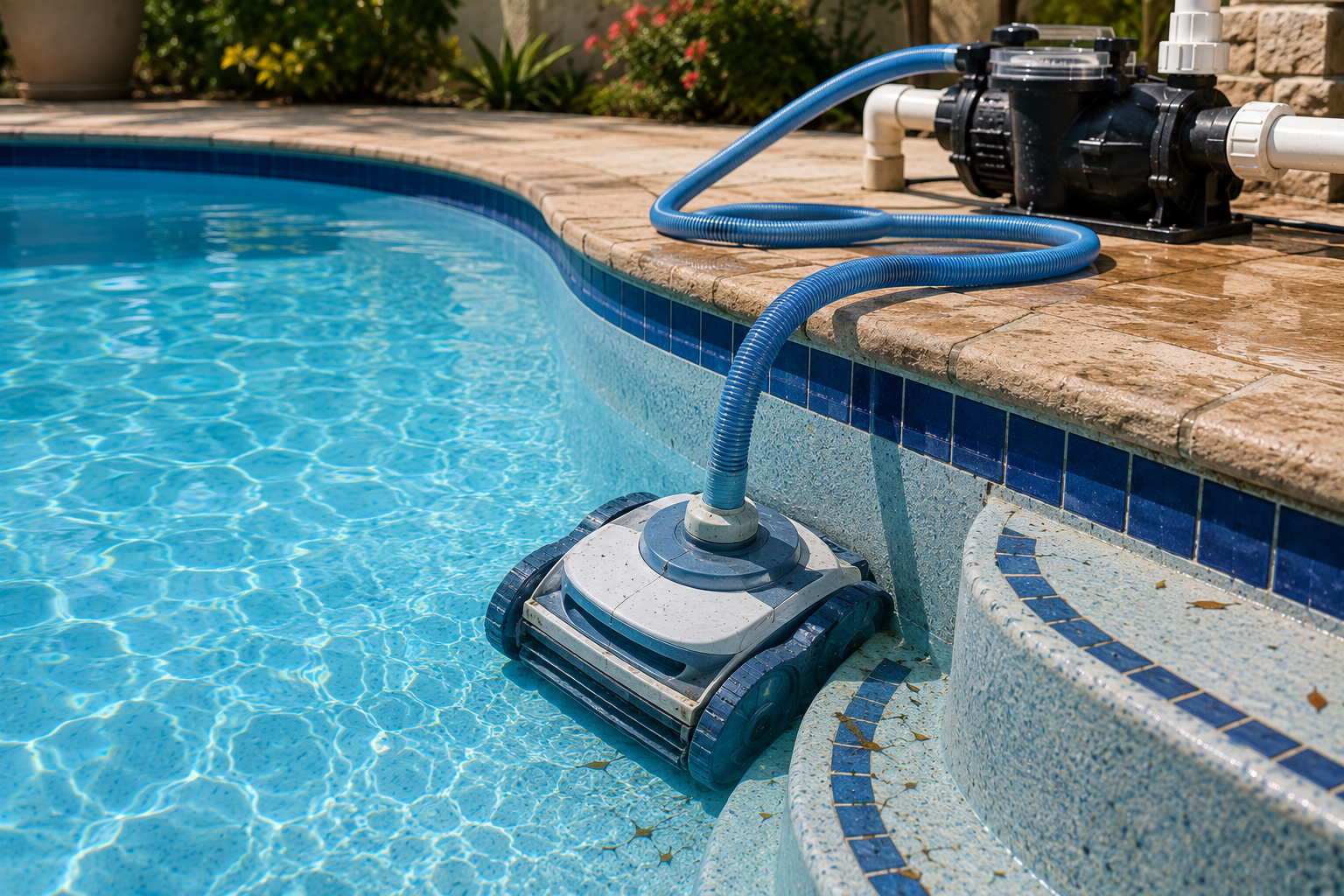
If your automatic pool cleaner repeatedly gets stuck on steps, corners, drains or one section of the pool, Absolute Pools can identify the cause and provide cleaner, suction and circulation repairs across Cape Town and surrounding areas.
An automatic pool cleaner should move through most areas of the swimming pool without remaining in one place for long. Occasional pauses can be normal, but repeated sticking usually indicates a problem with the cleaner setup, suction level, hose, internal components or pool layout.
The cleaner may be receiving too much suction, the hose may be incorrectly sized or weighted, or a return jet may be pushing it towards the same corner. Worn footpads, tracks, wheels and internal parts can also prevent the cleaner from changing direction properly.
Some pool shapes are naturally more difficult to clean. Tight corners, steep walls, shallow ledges, steps and raised main drains can interrupt the cleaner’s route. The cleaner and circulation system should be assessed together before replacement is considered.
Pool cleaners commonly become trapped:
Where the cleaner stops can provide useful clues about the cause.
Fill the form below and our team will be in touch with you shortly.
The hose should be long enough for the cleaner to reach the furthest point of the pool, with a small amount of additional length.
A hose that is too short can pull the cleaner away from certain areas or hold it tightly against a wall, corner or step. The cleaner may repeatedly stop at the limit of the hose rather than changing direction.
Additional hose sections may be required, but excessive length can create a different set of problems.
An excessively long hose may form large loops, twist around itself or become trapped against the cleaner.
The additional hose can drag behind the unit and restrict movement. It may also wrap around ladders, steps or other pool fittings.
The hose should be sized to suit the pool rather than left significantly longer than necessary.
Cleaner hoses can develop a permanent curve after being stored tightly coiled or exposed to heat.
A twisted hose can pull the cleaner towards one side of the pool and prevent it from changing direction naturally. The cleaner may repeatedly return to the same corner or wall.
The hose should be laid straight in warm sunlight where suitable so the sections can relax. Severely distorted hose sections may need replacement.
Some pool cleaners use hose floats or weights to control how the hose sits in the water.
Incorrect placement can cause the cleaner to lift, tilt or remain trapped against steps and walls. Too much weight near the cleaner can restrict movement, while poor flotation can allow the hose to drag along the floor.
The correct setup depends on the cleaner model and pool shape.
More suction does not always improve cleaner performance.
Excessive suction can make the cleaner grip the pool surface too firmly. It may become stuck on the main drain, against steps or in one section of the floor.
High suction can also make internal parts operate too quickly and wear prematurely. The valve or suction regulator may need adjustment.
Weak suction can prevent the cleaner from moving away once it reaches a corner or obstacle.
The cleaner may stop on steps, remain against a wall or fail to climb out of a shallow area. Low water levels, blocked baskets, dirty filters, damaged hoses and pump problems can all reduce suction.
The wider circulation system should be checked if the cleaner also moves slowly across open areas.
Return jets create water movement inside the pool.
A jet aimed directly towards the cleaner’s route can push the hose or cleaner into the same corner repeatedly. The problem may appear only while the pool pump is operating.
Adjusting the direction of the return flow can help the cleaner move more evenly around the pool.
Pool steps create sharp changes in depth that some automatic cleaners struggle to navigate.
The cleaner may climb onto the first step and remain there, wedge itself beneath an overhang or lose suction as part of the unit rises above the water.
Hose balance, suction and cleaner type can all affect how well the unit handles steps.
Square corners and tight curves can trap cleaners that do not turn effectively.
The unit may continue pushing into the same point because its diaphragm, turbine, steering mechanism or tracks cannot change direction.
Return flow and hose tension can make the problem worse.
A raised main drain can create a strong suction point or physical obstruction.
The cleaner may settle directly over the drain and remain there, especially when suction is high. The shape of the cleaner and drain cover also affects whether the unit can move away.
Suction adjustment or a suitable drain cover solution may be needed.
Cleaner hoses can wrap around ladder rails, handrails and other fixed fittings.
The cleaner may continue moving until the hose becomes tight, leaving the unit trapped in one area.
Hose length, float placement and ladder position should be considered. Removing or modifying safe removable obstacles during cleaning may help where practical.
Tanning ledges, benches and shallow shelves can interrupt the cleaner’s route.
The cleaner may climb partly onto the ledge and lose water flow through its internal mechanism. It may then remain stationary until moved manually.
Some cleaners are not designed to clean very shallow areas reliably.
Pools with a steep transition between shallow and deep sections can trap cleaners at the lowest point.
Insufficient suction, worn contact surfaces or poor hose balance may prevent the cleaner from climbing the slope.
The unit may repeatedly return to the same area after being repositioned.
Many suction cleaners use a flexible diaphragm to create movement.
A diaphragm that is stretched, split or stiff may still allow some movement but fail to produce consistent directional changes. The cleaner can pause frequently or remain trapped against obstacles.
The damaged part can usually be replaced when the cleaner body remains sound.
Some automatic cleaners rely on turbines, gears or steering mechanisms.
Wear, debris or damaged teeth can prevent the cleaner from turning correctly. It may move forward but fail to redirect itself after reaching a wall or corner.
Internal components should be inspected before the entire cleaner is replaced.
The footpad, shoes or contact surfaces help the cleaner grip the pool floor and move efficiently.
When these parts wear down, the cleaner may slide instead of stepping or steering properly. It can remain in one area or struggle to move across slopes.
Rough marbelite and damaged surfaces can accelerate wear.
Tracked and wheeled cleaners depend on even movement on both sides.
A stretched track, damaged wheel or worn drive component can cause the cleaner to turn constantly in one direction. It may circle in a small area or become trapped against the wall.
Replacing the affected components may restore a normal cleaning route.
Cracks, warped sections and loose internal fittings can affect the cleaner’s balance.
A damaged body may sit unevenly on the pool floor, reducing its ability to turn or climb. The cleaner may also lose suction around damaged connections.
Replacement may be more practical when the body and several internal components are worn.
Fill the form below and our team will be in touch with you shortly.
A cleaner that repeatedly remains against the wall may have excessive suction, poor steering or a hose pulling it sideways.
The return jets may also be pushing the cleaner towards that section. Observe whether the problem occurs only while a particular return line or water feature is operating.
Worn internal parts can prevent the cleaner from reversing or changing direction after reaching the wall.
A cleaner that always stops in the same corner may be influenced by the hose, return flow or pool shape.
The hose may be curved towards that area, or a return jet may be directing water and the cleaner hose into the corner. The cleaner’s turning mechanism may also be worn.
Repositioning the hose connection or adjusting return jets can sometimes improve movement, but persistent problems may require cleaner repairs.
A cleaner moving in circles often has uneven drive components.
One wheel, track, footpad or side of the internal mechanism may be worn or blocked. The hose may also be twisted and pulling the cleaner continuously in one direction.
The unit should be checked for uneven movement before suction settings are changed unnecessarily.
Fill the form below and our team will be in touch with you shortly.
Some cleaners climb walls aggressively when suction is too high.
The unit may reach the waterline, draw air and lose suction before dropping back into the pool. Repeated air intake can also affect the pump and return flow.
Reducing suction and checking the hose weights may help stabilise the cleaner.
Cleaner movement may change after backwashing because the pool water level has dropped or filter flow has improved.
A lower water level can allow the skimmer to draw air, while improved suction can cause the cleaner to grip too strongly.
The water level, valve setting and cleaner suction should be checked after the filter is returned to normal operation.
The pump must be switched off before changing the multiport valve position.
A new pool pump may create stronger or different suction than the previous unit.
The cleaner can begin climbing too aggressively, sticking to the main drain or remaining against the pool surface. The suction valves or regulator may need adjustment.
The replacement pump should also be correctly sized for the pool, filter and plumbing system.
Fill the form below and our team will be in touch with you shortly.
New hose sections may be stiff or curved from packaging and storage.
The hose can pull the cleaner towards one side of the pool until it relaxes. Incorrect hose length or poorly fitted connectors can also affect movement.
The replacement hose should be compatible with the cleaner and arranged according to the pool shape.
A newly resurfaced pool may have different friction and surface characteristics.
The cleaner may grip more strongly, move faster or struggle at transitions that previously caused no problem. Suction and hose balance may need adjustment.
Cleaner footpads and shoes should also be suitable for the new pool finish.
A rough or deteriorated marbelite surface can restrict cleaner movement and wear down contact parts.
The cleaner may drag, stop on rough patches or repeatedly catch in damaged areas. It may also struggle to climb slopes or walls.
Widespread roughness, cracking or surface failure may indicate that the pool needs resurfacing rather than cleaner adjustment alone.
Fill the form below and our team will be in touch with you shortly.
Loose, raised or missing pool tiles can catch the cleaner body, wheels or footpad.
The hose may also snag on damaged edges. Continual cleaner movement can worsen already loose tiles.
The affected tiles should be repaired before the cleaner is returned to normal use.
Hose tangling may be caused by excess hose length, twisted sections or incorrectly positioned floats.
Strong return jets can push the hose into loops. A cleaner that turns repeatedly in one direction may also wind the hose around itself.
The hose should be checked for permanent bends and arranged to allow free movement across the pool.
Fill the form below and our team will be in touch with you shortly.
Strong suction suggests that the pump and filter are moving water, but the cleaner may be gripping too firmly or have an internal steering fault.
The suction regulator, valve setting, cleaner diaphragm, turbine, tracks or wheels should be assessed.
Increasing suction further is unlikely to solve the problem.
Weak suction can prevent the cleaner from overcoming steps, slopes and corners.
Possible causes include blocked baskets, dirty filters, damaged hoses, low water level, air leaks, blocked impellers and suction-pipe faults.
The circulation problem should be repaired before the cleaner is replaced.
Air bubbles from the return jets indicate that air is entering the suction side of the system.
The cleaner hose, vacuum plate, pump lid, O-ring, skimmer connection and suction plumbing should be checked.
Air in the system reduces cleaner performance and can cause the pump to lose prime.
Fill the form below and our team will be in touch with you shortly.
A cleaner that remains in one area cannot remove debris evenly from the pool floor.
Dirt may collect in corners, steps and low-flow areas. Reduced circulation can also allow cloudy or green water to develop.
The cleaner fault should be resolved, but the pool may still require manual cleaning and water treatment afterwards.
Yes. Some pool shapes are more challenging for automatic cleaners.
Tight corners, beach entries, shallow ledges, steep walls, raised drains and unusual floor transitions can interrupt movement. A cleaner that performs well in a simple rectangular pool may struggle in a more complex design.
The cleaner type and setup should suit the pool’s shape and surface.
Fill the form below and our team will be in touch with you shortly.
Repair is usually suitable when the cleaner body remains in good condition and the fault is limited to a hose, diaphragm, turbine, footpad, track, wheel or steering component.
Replacement may be more practical when several components are worn, the body is cracked or replacement parts are unavailable.
The pool’s suction and circulation should still be checked before purchasing a new cleaner. A new unit can develop the same problem when the underlying cause is excessive suction, weak flow or unsuitable hose setup.
Check whether the hose is long enough to reach the furthest point of the pool without excessive extra length.
Lay twisted hose sections straight and inspect them for cracks. Check whether the cleaner is stuck on the same physical feature each time.
Observe whether movement changes after adjusting the suction slightly or redirecting a return jet. Clean the skimmer and pump baskets and check the filter pressure.
Avoid dismantling the cleaner beyond basic accessible parts unless you are familiar with its internal mechanism.
Absolute Pools checks the cleaner, hose and circulation system to determine why movement is restricted.
The assessment may include hose length, hose condition, float or weight placement, cleaner suction, return-jet direction and the pool areas where the unit becomes trapped.
Cleaner diaphragms, turbines, tracks, wheels, footpads and steering components may also be inspected for wear or blockages.
The pump, filter, baskets and suction plumbing are considered when weak or excessive flow contributes to the problem.
Fill the form below and our team will be in touch with you shortly.
The repair depends on the identified fault.
Damaged hose sections, diaphragms, turbines, tracks, wheels, footpads and steering components can often be replaced. Hose length and balance may also be corrected.
Weak suction may require pool pump, filter, valve, skimmer or suction-pipe repairs. Excessive suction can often be corrected through suitable valve or regulator adjustment.
A badly worn or incompatible cleaner may need replacement where reliable movement cannot be restored.
Absolute Pools diagnoses automatic pool cleaners that repeatedly get stuck across Cape Town and surrounding areas, including the Northern Suburbs, Southern Suburbs, Atlantic Seaboard, Cape Town City Bowl, West Coast suburbs and Helderberg.
Service areas include Durbanville, Bellville, Brackenfell, Kraaifontein, Parow, Goodwood, Milnerton, Table View, Parklands, Blouberg, Century City, Pinelands, Rondebosch, Claremont, Newlands, Constantia, Tokai, Wynberg, Plumstead, Hout Bay, Sea Point, Green Point, Camps Bay, Somerset West, Strand, Gordon’s Bay, Stellenbosch, Paarl and surrounding areas.
Fill the form below and our team will be in touch with you shortly.
Absolute Pools checks the cleaner components, hose setup, suction level, return flow and pool layout before recommending repairs or replacement.
We assist with automatic pool cleaner repairs, damaged hoses, weak suction, pump faults, filter problems and suction-pipe repairs.
Our focus is on finding why the cleaner repeatedly becomes trapped and restoring more reliable movement around the pool.
A cleaner that remains in one area cannot remove debris effectively and may indicate a hose, suction, circulation or internal cleaner fault.
Contact Absolute Pools for automatic pool cleaner diagnosis and repairs across Cape Town and surrounding areas.
Fill the form below and our team will be in touch with you shortly.
WhatsApp us